


A wooden tool box is a portable or stationary tool container made from solid wood, plywood, engineered wood, or mixed materials. The right design depends on tool weight, drawer depth, transport needs, humidity, security, and whether you need storage or a working surface.
Table of Contents
Wooden Tool Box Types Explained
The term wooden box for tools covers several products that aren’t interchangeable. A toolbox usually has a handle and travels with you, while a wooden tool chest tends to have drawers and stays on a bench; retailers often blur those labels.
Open-Top Tool Caddies
An open-top caddy suits frequently used hand tools, garden tools, cleaning supplies, and craft materials. Access is immediate, but the open design provides no rain protection, dust control, or meaningful security.
Look for a rounded handle, raised feet, removable dividers, and a base captured in grooves. A narrow handle can bite into your fingers once the load passes 20 pounds, while tall tools leaning to one side make the caddy swing and twist at the wrist.
Lidded Portable Boxes
A lidded portable box protects carving tools, carpentry tools, model-making equipment, and household repair kits from dust and accidental spills. A removable tray keeps small tools above heavier items, preventing the frustrating pile that develops inside a plain deep box.
The lid still doesn’t make the box waterproof. Check hinge screw length, lid clearance, latch engagement, and whether a lid stay prevents the top from dropping onto your fingers.
Mini drawer chests: These compact chests suit electronics tools, fasteners, jewelry equipment, hobby supplies, and craft materials. Confirm internal drawer measurements and drawer stops because an exterior “14-inch” label says little about usable depth.
Wooden machinist chests: Multiple shallow drawers separate micrometers, calipers, gauges, layout tools, carving tools, and watchmaking equipment. Felt feels soft and quiet under a steel micrometer, but damp felt can hold moisture against polished metal.
Wood-top tool cabinets: A wood top tool box is usually a steel rolling cabinet capped with hardwood, bamboo, butcher block, plywood, or a wood-look composite. It can support dense sockets and power tools when the manufacturer publishes suitable drawer, caster, and cabinet ratings.
Middle tool chests: A middle tool chest is an intermediate drawer unit installed between a rolling cabinet and a top chest. It adds storage without taking more floor space, but its footprint, supporting load, locking arrangement, and finished stack height must match the other cabinets.
Materials, Construction and Finishes
Material names alone don’t predict durability; panel thickness and joinery often matter more. A well-supported plywood chest can outlast a decorative hardwood box with a thin bottom and handles fixed by short screws.
Solid Wood Options
Pine is inexpensive and easy to machine, making it useful for a light wood tool box, though it dents quickly and screws can strip if overtightened. Poplar paints cleanly, while walnut, beech, white oak, and hard maple offer greater wear resistance at higher cost and weight.
| Material | Approximate Janka hardness | Practical use | Main limitation |
|---|---|---|---|
| Eastern white pine | 380 lbf | Light caddies and prototypes | Dents and strips easily |
| Poplar | 540 lbf | Painted boxes and drawers | Shows workshop impacts |
| Black walnut | 1,010 lbf | Traditional precision chests | Higher material cost |
| American beech | 1,300 lbf | Handles and drawer runners | Movement in humid conditions |
| White oak | 1,360 lbf | Wear-resistant premium storage | Open pores complicate smooth finishes |
| Hard maple | 1,450 lbf | Worktops and runners | Harder to machine near edges |
Hardness figures describe resistance to indentation, not complete structural strength. The USDA Wood Handbook also explains how grain direction, moisture, density, and defects affect wood behavior.
Plywood and Engineered Wood
Quality plywood stays flatter than wide solid boards and works well for sides, bottoms, trays, and drawer parts. Baltic birch-style panels have many thin plies and relatively consistent cores, giving screws and exposed edges better support than low-grade construction plywood.
Use 6–9 mm material for light dividers and supported drawer bottoms, about 12 mm for compact sides, and about 18 mm for larger structural panels. These are design starting points rather than certified capacities; span, grain direction, supports, and load placement still control deflection.
MDF and particleboard are flat and smooth but heavy for portable storage. Their edges hold screws poorly, and an unnoticed spill can leave a swollen, furry ridge that never returns to its original thickness.
Joinery and bottom support: Dovetails, box joints, dados, and reinforced rabbets spread loads better than plain butt joints. Capture the bottom in grooves or support it with perimeter cleats; brads driven into a thin panel edge shouldn’t carry a box full of steel.
Drawers and slides: Wood runners are quiet, repairable, and traditional, but they need seasonal clearance. Ball-bearing slides carry loads smoothly when aligned accurately; see these practical notes on bottom drawer slides before choosing hardware.
Handles, hinges and locks: Prefer through-bolts, tenons, dowels, or long-grain reinforcement at carrying handles. Piano hinges spread lid stress, while a small cam lock discourages casual access but won’t turn a light wooden chest into theft-resistant storage.
Finish options: Oil gives a natural feel and easy spot repair; polyurethane resists abrasion and liquid better; shellac dries quickly but reacts to alcohol; lacquer produces a smooth surface but needs controlled application. Paint works well on plywood and poplar, and a pale interior makes dark tools easier to see.
Choosing Size, Capacity and Portability
Choose size from the largest actual tool and its loaded weight, not from exterior product dimensions. Walls, runners, drawer fronts, hinges, liners, and trays can consume several inches of advertised space.
Measure Internal Space
Measure each tool’s length, width, height, and weight. Add finger clearance plus space for liners, dividers, removable trays, and projecting latch hardware; a plane that technically fits can still be difficult to lift from a tight compartment.
Match Drawer Depth
Shallow drawers fit calipers, chisels, files, pliers, and measuring tools. Medium drawers suit hammers and hand planes, while drills, chargers, sanders, and molded socket cases need deep compartments.
Calculate loaded weight: Add the empty box, every tool, accessories, and stored fasteners. A 12-pound chest holding 35 pounds of tools becomes an awkward 47-pound lift, often making a nominally portable design safer as bench storage.
Allow future capacity: Leaving roughly 15–25% of usable space open reduces early replacement and permits clearer tool spacing. Treat that range as a planning guide, and use movable dividers instead of locking every compartment to one tool.
Assess security needs: Latches stop drawers or lids from opening during transport, while locks mainly deter casual access. Expensive precision tools need controlled room access or anchored steel storage rather than reliance on a small wooden lock plate.
Wood-Top and Middle Chest Criteria
A toolbox wood top cabinet should be selected as a load-rated steel system, not as an all-wood chest. Check cabinet, drawer, caster, and worktop limits independently because the lowest rating controls safe use.
Cabinet Load Ratings
Request the total cabinet rating, individual drawer rating, caster capacity, and maximum worktop load. Don’t estimate strength from drawer width, steel thickness claims, or product photographs showing heavy socket sets.
Worktop Materials
Worktop cores differ: solid hardwood and thick butcher block can often be sanded; thin veneer permits limited repair; bamboo panels vary by adhesive and construction; wood-look MDF may swell after water reaches an edge. Check compatibility before exposing any top to brake fluid, solvents, adhesives, or cutting oil.
Work height: Many mobile benches fall near 34–38 inches high. Fine assembly may feel better slightly higher, while forceful planing often benefits from a lower surface; include casters, worktop thickness, and stacked chests in the final measurement.
Stability and casters: Put dense tools in lower drawers, lock casters on a level floor, and open one loaded drawer at a time. A cabinet can roll or tip before its nominal drawer rating is exceeded.
Stacking compatibility: Match the middle tool chest width and depth to the supporting cabinet, then confirm the base can carry the added chest and contents. Check lid clearance, lock access, mounting points, and whether the top drawers remain comfortably reachable.
Wooden Tool Box Options by Use
Product groups should be compared by intended use, not appearance or drawer count. Confirm dimensions, materials, liners, weight guidance, and availability on the seller’s page before ordering.
Portable Wooden Caddies
These portable organizers favor open access for household tools, art supplies, and light workshop items; compare their handle construction and usable compartments.

Ikee Design Wooden Storage Caddy
- Compact wood caddy for everyday organizing
- Built-in handle makes carrying simple
- Keeps makeup brushes and tools within reach
- Great for countertops desks and craft spaces
- Versatile storage for beauty and hobby supplies
 Buy on Amazon

Kings County 22 Inch Wood Tool Box
- 22 inch caddy provides generous supply storage
- Top compartment keeps larger items accessible
- Drawer organizes small tools and accessories
- Sturdy handle supports easy carrying
- Works well for crafts art supplies and tools
Buy on Amazon
Mini Tool Chests
These mini chests organize small repair tools and craft supplies, but they shouldn’t hold dense mechanic’s tools without a published load rating.

Weysat 11 Inch Mini Tool Chest
- Top compartment offers quick-access storage
- Two drawers organize small tools and supplies
- PVC liners help protect stored items
- Metal latch keeps contents securely closed
- Compact size suits crafts makeup and repairs
Buy on Amazon

Weysat 14 Inch Mini Tool Chest
- Roomy top storage for frequently used supplies
- Two drawers separate tools and accessories
- PVC liners provide added item protection
- Metal latch helps keep contents secure
- Portable wooden design for craft and makeup storage
Buy on Amazon
Precision tool chests: Compare drawer interiors, stops, liners, lock design, empty weight, and whether “walnut” describes solid wood, veneer, stain, or finish.

Walnut 8 Drawer Machinist Chest
- Eight drawers provide detailed tool organization
- Hardwood construction adds classic workshop style
- Walnut finish gives a refined appearance
- Key lock helps protect valuable tools
- Ideal for garages workshops and hobby benches
Buy on Amazon

Windsor Design 8 Drawer Tool Chest
- Eight drawers sort tools by size and type
- Wood construction adds timeless workshop appeal
- Keeps small tools easy to find
- Great for hobby benches and garage storage
- Compact chest helps reduce workspace clutter
Buy on Amazon
Art and craft cases: These cases suit brushes, pencils, palette knives, sewing items, and lightweight carving accessories rather than sockets or heavy workshop equipment.

MEEDEN Beech Wood Art Supply Box
- Beech wood organizer brings natural studio style
- Built-in drawer separates smaller supplies
- Compartments keep pens pencils and pastels sorted
- Carry handle makes supplies easy to transport
- Useful for art sewing crafts and DIY projects
Buy on Amazon

U.S. Art Supply Wooden Art Box
- Removable tray creates flexible supply storage
- Locking clasps help secure items during travel
- Organizes brushes pencils erasers and tools
- Wooden case offers durable artist-friendly storage
- Ideal for studio class and plein air use
Buy on Amazon
Unsuitable workshop products: Children’s play sets, decorative carriers, makeup organizers, and thin nesting crates shouldn’t be marketed as workshop storage without relevant material and load data. A staged photograph containing tools isn’t proof of carrying capacity.
Moisture, Rust and Maintenance
Wood does not prevent rust. It exchanges moisture with surrounding air, while felt, foam, leather, and cloth can retain dampness directly against steel.
Why Wood Cannot Prevent Rust
A closed chest can trap humid air after a cold tool enters a warmer room. Fine condensation may feel like a cool film rather than visible droplets, yet it can leave orange freckles on an unprotected chisel by the next inspection.
Rust-Prevention Measures
- Dry tools before closing the chest.
- Apply a compatible corrosion inhibitor to bare steel.
- Use replaceable or rechargeable silica-gel packs.
- Keep removable liners clean and dry.
- Inspect precision tools on a set schedule.
- Store the chest in a conditioned room where possible.
Custom-cut Kaizen foam limits movement and makes missing tools obvious, but any foam needs periodic lifting so trapped moisture and metal filings don’t remain hidden underneath.
Seasonal drawer binding: Solid-wood drawers swell across the grain during humid periods. Clean and wax wood runners, seal hidden surfaces, and resist planing a swollen drawer immediately; removing too much material can leave it rattling during a dry winter.
Hardware and runner care: Tighten loose slide screws, clean tracks, and use the lubricant named by the hardware maker. Oily products on traditional runners attract gritty sawdust, producing a dark abrasive paste and a rough scraping feel.
Finish and liner repair: Repair exposed wood before repeated moisture reaches it, and test cleaners in a hidden spot. Replace musty, fixed liners rather than masking the odor; that smell often signals retained moisture or biological growth.
Build a Simple Wood Tool Box
The easiest DIY wood tool box is an open-top caddy with two sides, two shaped ends, a supported bottom, and a rounded handle. Adapt every dimension to your longest tool and estimated loaded weight.
Caddy Design and Dimensions
A practical starting range is 16–24 inches long, 7–12 inches wide, and 4–8 inches high at the side walls. Make a cardboard mock-up first; it reveals awkward handle clearance and unstable tall tools before lumber is cut.
Material Thickness
Material near 12 mm thick can suit a small light-duty caddy. Larger boxes often benefit from 18 mm sides and bases, yet cleats and reduced unsupported spans can matter more than adding thickness everywhere.
Cutting and assembly: Measure the tools, prepare a cut list, round the handle edges, dry-fit the parts, drill pilot holes, and glue the box square. Use suitable wood glue, then clamp joints without squeezing every trace of adhesive from them.
Reinforcement and finishing: Capture the bottom in dados or add cleats beneath long spans. Reinforce handles with dowels, tenons, or through-fasteners, then sand sharp corners and finish both visible and hidden surfaces.
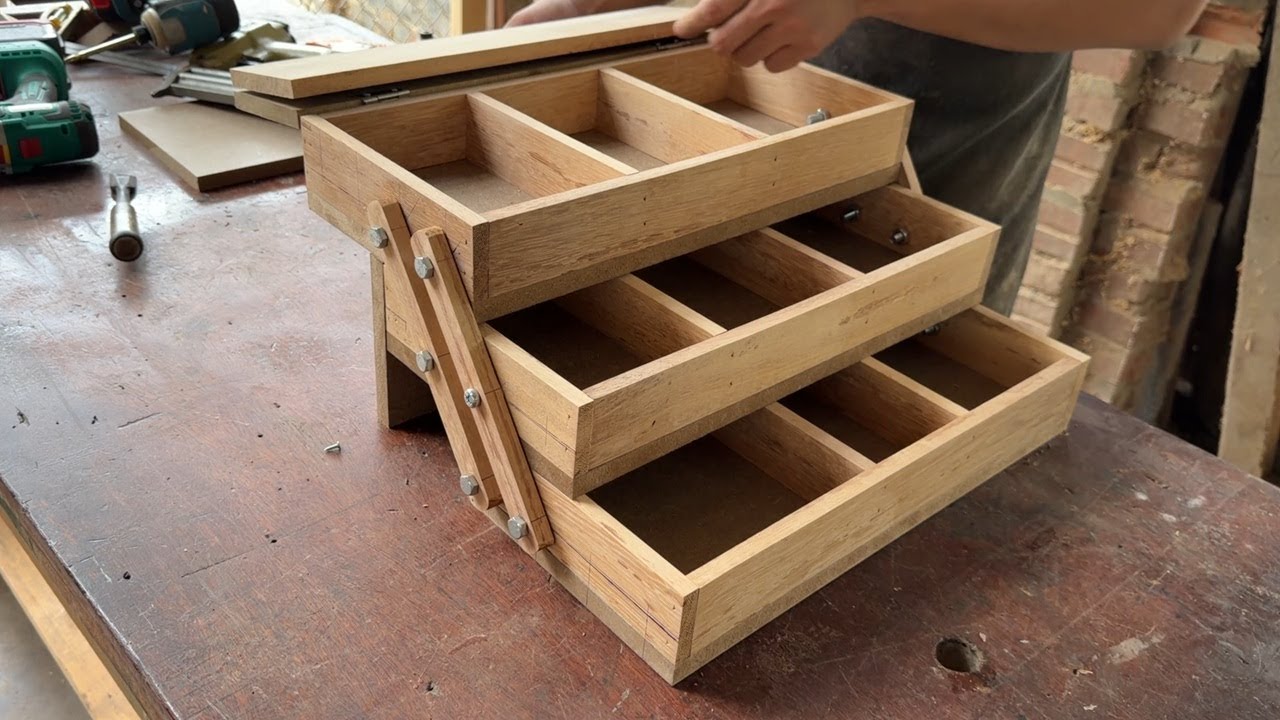
Workshop safety: Clamp small parts, keep hands away from blades and bits, and wear suitable eye, hearing, and respiratory protection. The OSHA woodworking guidance covers machine guarding, dust, kickback, and other shop hazards.
DIY cost considerations: Count lumber, hardware, glue, abrasives, finish, rubber feet, waste, and replacement pieces. A drawer chest also needs slides, pulls, hinges, latches, locks, and liners, so building one isn’t automatically cheaper than buying an entry-level chest.
Product Checks and Common Failures
Before buying, obtain internal dimensions and ratings, then inspect the structural path from handle to sides and from tools to bottom. Most failures begin where concentrated weight meets thin material or weak fasteners.
Required Product Data
- Exterior and usable internal dimensions
- Empty weight and published total load
- Per-drawer rating, where applicable
- Solid wood, plywood, veneer, MDF, or mixed construction
- Bottom-panel and drawer-bottom support
- Runner type, stops, handle attachment, hinges, and latches
- Liner and finish materials
- Warranty, return terms, and replacement hardware
Price and Value Bands
Typical price bands are about $20–$80 for simple caddies, $40–$150 for mini chests, $100–$300 for entry machinist-style chests, and $300 to above $1,000 for premium hardwood chests. Steel rolling cabinets with wood tops often fall around $300–$1,500+, depending on dimensions, drawer hardware, worktop, and brand.
Prices shift with species, manufacturing location, shipping, locks, customization, and hardware. More drawers don’t guarantee better value: eight shallow drawers may organize micrometers beautifully while failing to accept a drill, charger, or socket case.
Material and capacity red flags: Treat “hardwood finish” as a color or surface description until the seller identifies the substrate. Missing interior measurements, absent load ratings, thin decorative laminate, and vague “wood construction” claims all require clarification.
Handle and bottom failure: Short screws into end grain can loosen as the box swings during walking. Through-dowels, bolts, tenons, captured bottoms, and cross-cleats provide safer load paths; inspect joints after the first few loaded trips.
Drawer and liner problems: Drawers without stops can spill when a chest tilts, while swollen runners tempt owners to force or plane them. Fixed felt may hide dampness, filings, and rust, so removable liners offer easier inspection.
Hinge and tipping risks: Don’t carry a chest by its open lid or use the lid as a shelf. Store heavy items low, open one loaded drawer at a time, use lid stays, and stack only components approved for the supporting cabinet.
Practical Notes From Real-World Use
A box often becomes uncomfortable before it reaches its structural limit. The first warning may be a hot pressure line across the fingers, a handle that rolls in the palm, or the box bumping the leg because dense tools sit away from its center.
Test the balance by loading the planned tools and lifting the box only a few inches above a padded surface. If it tilts sharply, rearrange dense items low and near the center rather than compensating with a stronger handle alone.
Drawer fit should be checked after the chest spends a full season in its intended room. A silky drawer in a dry showroom can develop a sticky final inch in a humid garage, while excessive factory clearance produces a hollow clack each time the chest moves.
Beginner mistakes include trusting exterior measurements, filling every available space, storing wet tools, and assuming a lock proves strength. The better workaround is to measure real tools, reserve spare capacity, verify ratings in writing, and inspect hidden liner surfaces regularly.
The best wooden tool chest isn’t the one with the most drawers; it’s the one whose materials, dimensions, supports, and hardware match the weight and shape of the tools.
Practical selection principle
FAQs
What Wood Is Best For A Wooden Tool Box?
Hardwood such as maple, oak, or beech is best for a durable wooden tool box. These woods resist dents and hold screws well, making them ideal for frequently used boxes. Pine is lighter and less expensive, but it dents more easily and benefits from a protective finish.
Is Plywood Suitable For Building A Tool Box?
Yes, quality plywood is suitable for building a tool box, especially for the body and trays. Choose cabinet-grade birch or hardwood plywood with few voids for strong, clean edges. Avoid thin construction plywood, which can splinter, warp, or leave weak edges around screws.
How Thick Should Wood Be For A Toolbox?
Wood that is 1/2 to 3/4 inch thick works well for most toolboxes. Use 3/4-inch stock for the base, lid, and heavy-duty boxes, while 1/2-inch material can reduce weight on sides and trays. Increase thickness if the box will carry large hand tools or metal equipment.
How Do You Prevent Tools From Rusting In A Wooden Chest?
Keep tools dry and control moisture inside the wooden chest to prevent rust. Wipe tools clean before storage, add silica gel or a rechargeable dehumidifier, and apply a light coat of rust-preventive oil to bare metal. Avoid storing the chest on damp concrete, and occasionally air it out.
What Is The Difference Between A Tool Box And A Tool Chest?
A tool box is usually a portable container designed for carrying a basic set of tools. A tool chest is generally larger, heavier, and intended for organized storage in a workshop or garage. Tool chests often have multiple drawers, while tool boxes commonly use a single compartment or removable tray.


