


A workshop table is a stable surface for repairs, woodworking, assembly, and benchtop tools. Choose one by matching its size, working height, stability, load rating, workholding, and mobility to the jobs you perform most often.
Table of Contents
Quick Workshop Table Comparison
The best workshop table type depends on whether you need rigidity, storage, or a bench that folds after each project. Published capacities help narrow the field, but they don’t reveal lateral movement, concentrated-load limits, or caster behavior.
Type and Best Use
Folding models suit jobsites and tight garages, while fixed wood-top benches handle vises, repeated repairs, and stationary tools more effectively. Rolling benches serve shared spaces, and pegboard models keep frequently used hand tools visible.
| Product or type | Best use | Key supplied feature | Main point to verify |
|---|---|---|---|
| Worx Pegasus | Portable DIY and temporary woodworking | Table and sawhorse modes | Mode-specific capacity |
| OLBRUS adjustable bench | Permanent powered workstation | Hardwood top and outlets | Power-strip certification |
| CAMMOO pegboard bench | Organized repair area | Pegboard and rubberwood top | Hook compatibility |
| CAMMOO 96-inch bench | Long assemblies | Eight-foot working length | Room and doorway clearance |
| Compact 39-inch bench | Small garage or craft area | Drawer and lower shelf | Seated knee clearance |
| Heavy-duty oak-top bench | Heavy stationary equipment | 2,500-pound listed capacity | Load-test conditions |
| Pterying mobile bench | Flexible garage layout | Lockable wheels | Caster and swivel locks |
Size, Height, and Weight
Measure the bench’s open footprint, usable top, height range, product weight, and clearance for drawers or long stock. A table can fit the wall yet block a door once a vise, power cord, or fully extended drawer adds several inches.
Capacity and Top Material
Treat every capacity as a manufacturer-listed rating, commonly based on stationary, evenly distributed weight. Hardwood and laminated oak accept clamps and can often be refinished; MDF stays flat but reacts badly to moisture and repeated edge fastening.
Mobility and Folded Size
A useful portable bench needs a manageable carry weight, balanced handle, compact folded profile, and reliable locks. A folding table that weighs 70 pounds or won’t stand safely in storage may be movable without being practically portable.
Clamps, Storage, and Power
Included clamps can add more working value than a large capacity figure, particularly for sanding and cutting. For powered benches, check receptacle spacing, cord length, overload protection, switch position, and a recognized UL or ETL mark.
Warranty and Current Price
Basic folding tables commonly cost $50–$200, fixed entry-level benches $150–$500, and powered or storage-equipped models $300–$900 or more. Check the live listing for price, warranty length, shipping, return freight, and whether accessories shown in photographs are included.
Best Workshop Tables by Use Case
The strongest shortlist matches each bench to a clear use case rather than ranking unrelated fixed, folding, and rolling designs by one headline specification. Prices, inventory, dimensions, accessories, and seller terms can change, so confirm the active model before ordering.
Product Shortlist
These seven options cover portable, powered, compact, high-capacity, and mobile workshop layouts. This page may earn a commission from qualifying purchases without changing the price paid by the buyer.
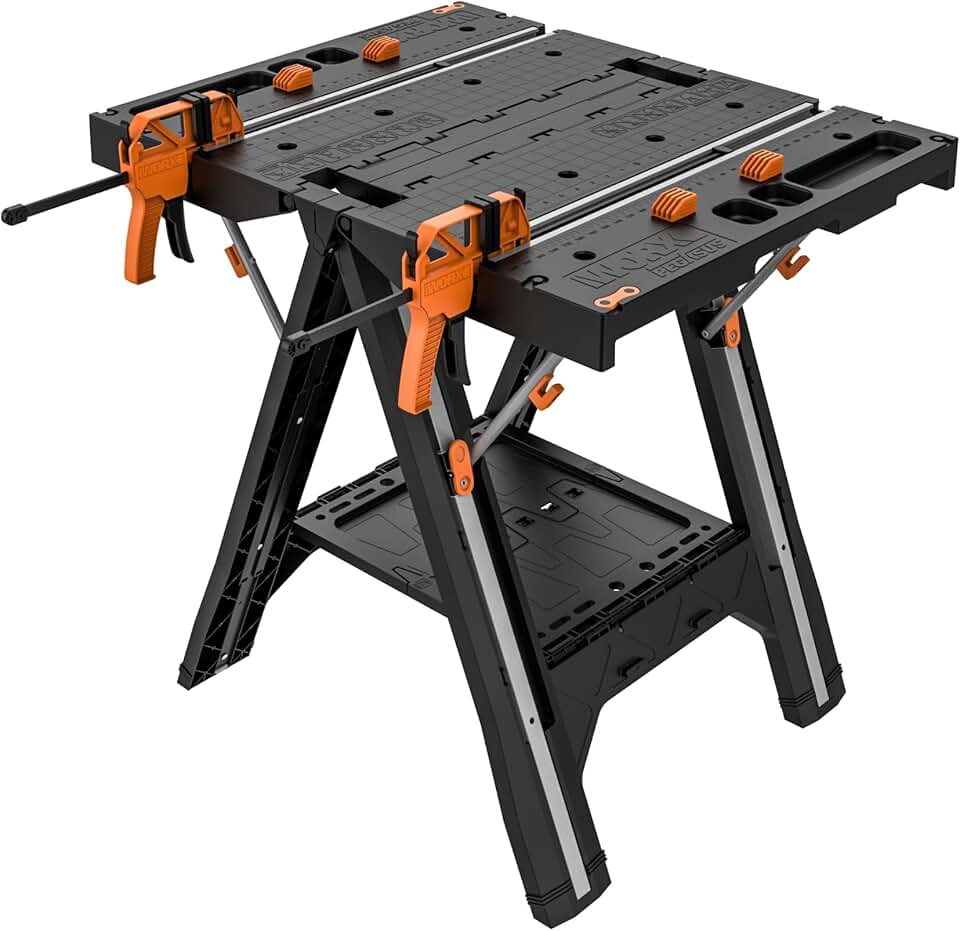
Worx Pegasus Folding Worktable
- Transforms from worktable to sawhorse in seconds
- Folding design stores easily between projects
- Lightweight build is simple to carry
- Includes clamps and clamp dogs for secure holds
- Generous surface supports DIY tasks anywhere
 Buy on Amazon

OLBRUS Adjustable Power Workbench
- Adjustable height for comfortable projects
- Hardwood surface supports demanding tasks
- Handles up to 2000 pounds of equipment
- Built-in outlet keeps tools powered nearby
- Ideal for garages workshops offices and homes
Buy on Amazon

CAMMOO Workbench with Pegboard
- Adjustable height adapts to your workspace
- Rubber wood top offers a sturdy work surface
- Supports up to 2000 pounds
- Pegboard keeps essential tools within reach
- Integrated outlets simplify powered projects
Buy on Amazon

CAMMOO Extra-Wide Power Workbench
- Spacious 96 inch design gives projects room to grow
- Adjustable height supports comfortable working
- Rubber wood top handles heavy daily use
- Holds up to 2000 pounds of tools and materials
- Pegboard and outlets keep your station organized
Buy on Amazon

Compact Workbench with Drawer
- Compact 39 inch size fits smaller work areas
- Wood top provides a practical crafting surface
- Built-in drawer stores small tools and parts
- Lower storage adds room for workshop essentials
- Versatile station for crafts repairs and printers
Buy on Amazon

Heavy-Duty Oak Top Workbench
- Laminated oak top delivers a strong durable surface
- Reinforced steel frame adds reliable stability
- Supports up to 2500 pounds
- Adjustable height suits varied projects
- Ideal for garages workshops homes and offices
Buy on Amazon

Pterying Mobile Garage Workbench
- Lockable wheels move your workspace where needed
- Mobile design is ideal for flexible garage layouts
- Pegboard keeps frequently used tools visible
- Wood top supports repairs crafts and mechanical work
- Great for DIYers mechanics and woodworkers
Buy on Amazon
Worx Pegasus: Portable Pick
The Worx Pegasus is the most suitable portable work table here for cutting, drilling, sanding, and temporary assembly. Common WX051 specifications list an open size near 31 × 25 × 32 inches, a weight near 30 pounds, a 300-pound worktable rating, and a separate 1,000-pound sawhorse rating; confirm these figures against the selected listing.
Its clamps and clamp dogs hold work more securely than a plain utility top. Under side pressure, the lightweight frame can still shift across smooth concrete, so place one foot against a lower leg during forceful handwork or move to a fixed bench rather than exceeding the intended task.
OLBRUS: Powered Fixed Pick
The OLBRUS suits a permanent repair station where adjustable height and nearby outlets matter. Its supplied claims include a hardwood surface and capacity up to 2,000 pounds, yet buyers should verify top thickness, adjustment increments, cord length, outlet certification, and whether the load rating assumes even distribution.
CAMMOO: Organization Pick
The CAMMOO pegboard model combines a rubberwood top, adjustable frame, integrated outlets, and visible tool storage. Check whether hooks come with it and whether standard pegboard accessories fit, since hole size, spacing, and the required rear clearance vary between metal and fiberboard panels.
CAMMOO: Large-Project Pick
The 96-inch CAMMOO gives long assemblies a full eight-foot surface and carries a supplied 2,000-pound rating. Before purchase, measure the delivery path, wall outlets, bench-end access, and space needed to turn sheet goods; an eight-foot carton can fail a stairwell turn that looks roomy from the doorway.
Compact Small-Space Pick
The 39-inch model fits crafts, small repairs, printers, and sharpening equipment where floor space is limited. It is 57 inches shorter than the 96-inch CAMMOO, while the drawer and lower shelf may reduce knee and foot room during seated work.
Oak Top: High-Capacity Pick
The heavy-duty oak-top bench has a supplied 2,500-pound capacity, 500 pounds or 25% above a 2,000-pound figure. That percentage compares published claims only; ask about distributed-load conditions, frame support, maximum-height capacity, and top construction before mounting a heavy machine.
Pterying: Mobile Garage Pick
The Pterying workbench fits garages that need a repair station moved between parking and project positions. Verify each caster’s rating and whether its brake locks both wheel rotation and swivel; a swiveling locked caster can still let the bench twitch sideways while filing metal.
Workshop Table Types Compared
A fixed workbench favors rigidity, while folding and rolling designs trade some stiffness for storage or movement. Product labels overlap, so select by frame construction, workholding, top support, and intended application rather than the name printed on the box.
Fixed Workshop Workbench
A fixed workshop workbench works best for mounted vises, repeated repairs, heavy assemblies, and benchtop machines. Wide leg spacing and cross-bracing resist racking, while leveling feet stop the faint corner-to-corner knock felt when a frame sits on an uneven slab.
Portable Work Table
A portable work table suits driveways, jobsites, and garages that must be cleared after use. Compare carrying weight, folded thickness, setup time, handle balance, accessory storage, and vehicle fit; the related guide to workbenches covers broader bench layouts.
Collapsible Tool Bench
A collapsible tool bench stores in a narrow area and handles light assembly, sanding, painting, and supported cutting. Hinges introduce play and pinch zones, so open every lock fully and press each corner before setting down a tool or workpiece.
Portable Woodworking Bench
A portable woodworking bench differs from a plain folding table through clamps, dog holes, edge access, and resistance to sideways force. A huge static rating can’t compensate for a slippery top or legs that rack during planing.
Rolling Workshop Table
A rolling table works well in shared garages and around vehicles. Larger wheels cross expansion joints more smoothly, while drop-down leveling feet often provide a firmer working position than caster brakes alone.
Adjustable-Height Workbench
An adjustable bench serves several users and switches between detailed assembly and forceful work. Bolt-adjusted legs cost less but require unloading and lifting the top; crank systems change position more easily yet add moving parts and possible side-to-side play.
Storage and Pegboard Workbench
A storage bench keeps tools near the task and reduces trips across the shop. Pegboards work best for light, frequently used items, while drawers protect measuring tools from gritty dust; leave enough open space for knees if the table will support seated tasks.
Specialty Workshop Tables
Router tables, welding tables, outfeed stations, machine stands, and downdraft tables solve narrower problems than a general bench. A dedicated router table provides a proper insert, fence, dust connection, and guarded bit area that a plain worktop lacks.
Workshop Table Size and Height
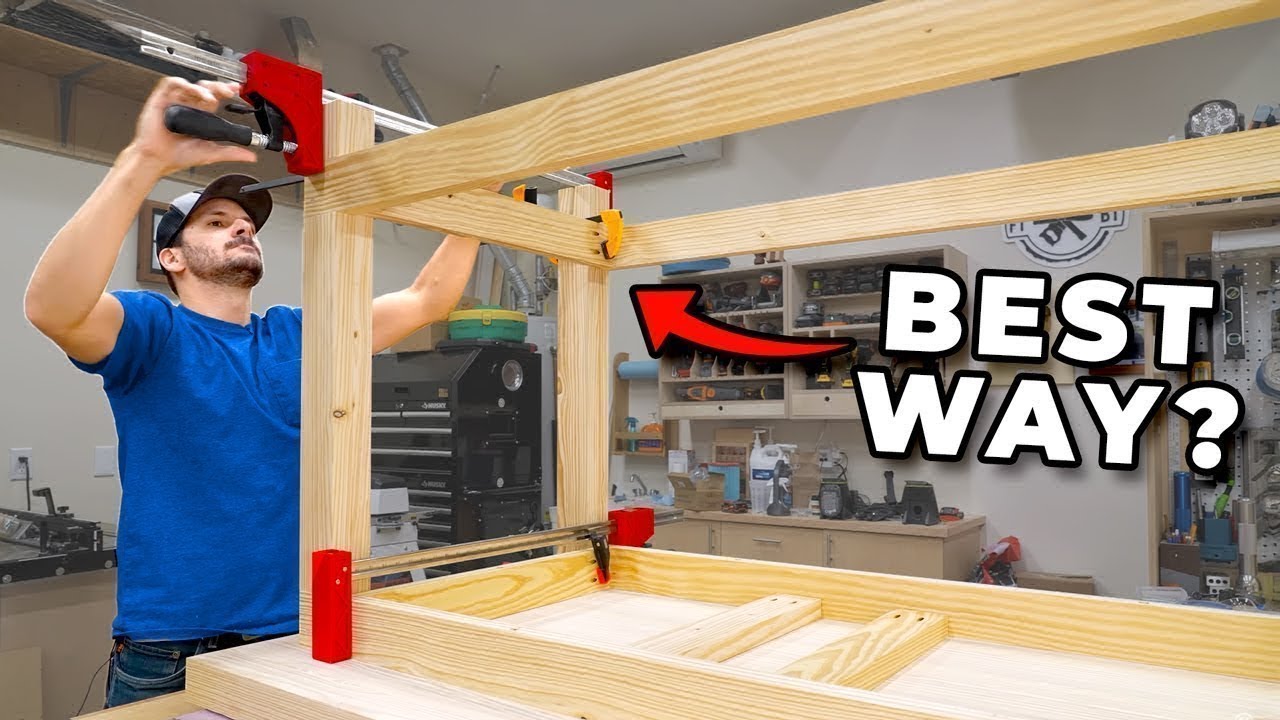
A practical bench fits the user, routine workpiece, room, and access path. For many standing tasks, a height around 34–38 inches and a wall-bench depth around 24–30 inches offer a useful starting range rather than a fixed rule.
Length and Width
Consumer benches often range from 48 to 96 inches long, with compact models below that range. Size the top around the largest routine project, then account for vise projection, stock overhang, and the space needed to walk around either end.
Depth and Reach
A 24–30-inch wall bench keeps most tools within comfortable reach. Deep tops collect cans and offcuts along the rear edge, where reaching across a sharp workpiece pulls the shoulder forward; an island can be wider because both sides remain accessible.
Surface Area Formula
Calculate top area with length × width ÷ 144 when measurements are in inches. A 72 × 30-inch top supplies 15 square feet, while a 96 × 30-inch top supplies 20 square feet, a one-third increase.
Workspace Clearance
Measure drawer extension, door swing, caster movement, machine infeed, and the path of long boards. Mark the full footprint with painter’s tape and carry a representative board through the area; this catches collisions that a wall measurement misses.
General-Purpose Height
There is no universal bench height, but 34–38 inches works as a planning range for many standing users. The right position depends on elbow height, footwear, top thickness, task force, and whether a vise raises the work above the surface.
Height by Task
Place detailed assembly near elbow level so small parts remain close to the eyes. Lower the surface for planing, pressing, and heavy sanding; this lets body weight assist the movement and reduces the burning tension that builds across raised shoulders.
Adjustable Bench Measurement
Stand in normal work shoes, bend one elbow near 90 degrees, and measure from floor to elbow. Use that number as a reference, then test positions above and below it; the OSHA workstation guidance explains neutral posture principles that also help with seated bench setup.
Workbench Top Materials Compared
Hardwood is repairable and clamp-friendly, plywood balances strength and price, MDF makes a flat sacrificial skin, and steel suits oily mechanical work. No surface handles every job, so match heat, moisture, impact, and fastening needs to the material.
Rubberwood and Hardwood
Rubberwood and other hardwood tops feel warmer than steel and don’t ring sharply when a wrench lands on them. They accept bench hardware and can often be sanded, but spilled water raises fibers into a rough patch and hot metal leaves black burns.
Laminated Oak
Laminated oak provides a stiff, repairable surface when the strips are well bonded and supported. Confirm whether “oak” means edge-laminated solid strips, veneer, or simply an oak-colored finish; top thickness and glue quality matter more than the sales label.
MDF and Hardboard
MDF stays flat and costs little, making it useful under a replaceable hardboard skin. Its edges crumble around frequently removed screws, and moisture can swell a wet corner into a soft ridge that never returns to its original thickness.
Plywood Tops
Plywood offers good screw retention, moderate weight, and easy replacement. Seal exposed edges, support long spans, and attach a thin sacrificial layer if glue, paint, cutting, or drilling will mark the working face.
Steel Work Surfaces
Steel resists oil and hard impact, wipes clean, and accepts magnetic fixtures. It can scratch finished wood, transmit vibration, conduct electricity and heat, and rust where coatings chip, so use protective mats for finished components.
Material Application Limits
A wood-top table isn’t a welding station, and a bare steel top isn’t kind to polished furniture parts. Chemical work may need a resistant liner, while precision machines need a flat, stiff mounting zone supported by frame members rather than unsupported sheet material.
Capacity, Stability, and Workholding
Capacity states how much load a manufacturer permits under stated conditions; stability describes how the bench behaves when pushed, struck, or loaded off center. Buyers need both, plus clamps or mounting points that stop the workpiece from moving.
Manufacturer-Listed Load Ratings
Don’t compare ratings as if every brand uses the same test. Ask whether the figure covers the top, shelf, casters, or frame; whether weight was evenly distributed; and whether an adjustable bench was tested at its highest or lowest setting.
Light-Duty Tasks
Crafts, electronics, painting, and small repairs rarely need a four-figure capacity. A flat surface, comfortable height, good lighting, and low wobble provide more value than unused load capacity.
DIY and Woodworking Loads
Add the weight of the workpiece, vise, clamps, benchtop tools, and material stored above or below the top. For woodworking, prioritize resistance to racking and usable clamp access; the guide to types of clamps explains common workholding choices.
Heavy Machine Loads
Heavy machines place concentrated loads through small feet and create vibration that a distributed rating may not cover. Align feet over frame rails, check bolt restrictions, and compare the complete footprint with purpose-built options such as a drill press table.
Static Versus Dynamic Loads
A static load remains stationary; a dynamic load rolls, vibrates, drops, or receives impact. A 100-pound motor lowered abruptly near one edge can twist a frame more severely than several hundred pounds spread quietly across the top.
Stability and Racking
Test racking by pushing the unloaded bench gently from each side while watching the joints. Cross-braces, wide leg spacing, tight fasteners, and leveling feet reduce movement; capacity alone won’t stop the loose, diagonal sway felt during planing.
Clamps and Bench Dogs
Compare clamp opening, throat depth, vertical use, storage, and access beneath the top. Measure dog-hole diameter and spacing before buying accessories, since similar-looking systems from different brands may not fit each other.
Vises and Machines
A vise applies concentrated vertical and sideways forces at the bench edge. Check top overhang, thickness, frame position, bolt clearance, and maker restrictions; heavy vises rarely pair well with folding plastic-composite tops.
Features, Portability, and Total Cost
Useful features reduce setup time without weakening the frame or cluttering the working area. Evaluate portability, electrical safety, lighting, storage, warranty, and accessory costs together rather than judging the base price alone.
Portability Score
Score portability from zero to two points in five categories: carry weight, folded volume, setup mechanism, handle quality, and accessory storage. A table earning eight to ten points suits frequent transport; four or fewer points signals occasional movement rather than daily carrying.
- Give two points if one person can lift and carry it comfortably.
- Give two points if the folded table fits its planned vehicle or storage slot.
- Give two points if setup needs no loose hardware.
- Give two points for a balanced, rounded carry handle.
- Give two points when clamps and dogs remain secured during transport.
Built-In Power Safety
Compare cord length, receptacle spacing, marked amperage, overload protection, and switch location. Add the nameplate amperage of connected tools, avoid daisy-chained strips, and position cords away from blades, hot surfaces, and rolling casters.
UL, ETL, and GFCI
Look for a recognized certification mark on the actual power strip, not just a vague claim in sales text. Integrated outlets don’t replace required garage circuit protection; the CPSC GFCI fact sheet explains how ground-fault protection reduces electric-shock risk.
LED Task Lighting
Check brightness, color temperature, glare, switch access, and whether the light can be replaced. A lamp mounted above tall pegboard tools can throw dark stripes across the work, so test the beam with the board loaded rather than empty.
Pegboards, Drawers, and Shelves
Pegboards keep common tools visible, drawers shield precision tools from dust, and shelves handle bulky cases. Include stored equipment in the bench load and check individual drawer or shelf ratings rather than applying the main-top rating to every component.
Durability and Warranty
Inspect hinge pins, welds, tubing, fasteners, drawer slides, coating, and replacement-part support. Warranty value depends on covered parts, labor, freight, and the claim process; a long term means little if returning a 150-pound bench costs more than the failed component.
Typical Price Ranges
Plan around $50–$200 for a basic folding table, $150–$500 for an entry-level fixed bench, $300–$900 or more for powered or storage-equipped models, and above $1,000 for many industrial or specialty tables. Confirm the exact delivered amount before purchase.
Total Ownership Cost
Budget for shipping, lift-gate delivery, assembly, clamps, a vise, hooks, caster upgrades, drawer liners, replacement tops, and return freight. A $250 bare bench can pass a $400 equipped model after adding quality workholding and electrical accessories.
Workshop Table Safety and Failures
Most bench failures start with incomplete locks, loose hardware, uneven floors, overloaded electrical strips, or loads placed far from frame support. Real-world warning signs include metallic clicks at adjustable joints, a dipping top edge, rocking feet, and casters that pivot during sideways pressure.
Safe Setup
Assemble the table on a level floor, follow the manual’s fastener sequence, seat every height pin, and engage folding locks or brakes. Press down on all four corners before loading; alternating taps reveal an unlevel foot faster than a visual check.
Safe Use
Clamp work rather than holding it beside a cutting path, keep heavy objects low and centered, and wear task-appropriate eye, hearing, respiratory, and hand protection. Never sit, stand, or climb on a bench without an explicit rating for that use.
Racking, Sag, and Hardware
Recheck bolts after initial assembly and after several work sessions, since coated frames and wood tops can settle. Sight across the top under side lighting; a bowed reflection or changing shadow line reveals sag before it becomes obvious by touch.
Caster Movement

Sweep debris before moving a loaded bench, lock every caster, and lower leveling feet where fitted. Small wheels stop sharply at floor joints, which can tip tall tools or send loose metal parts skittering across the top.
Folding Pinch Points
Keep fingers outside hinge paths and grip only marked handles during setup. Listen and look for full lock engagement, remove work and clamps before folding, and don’t force a mechanism obstructed by sawdust or a bent link.
Electrical Overload
Read tool nameplates, total simultaneous loads, and stay within the strip’s marked rating. Motors can draw a higher starting current, so a vacuum and saw started together may trip protection or heat an undersized cord.
Welding and Hot Work
Don’t weld, grind hot metal, or use a torch on a standard wood-top bench. Use a purpose-built conductive, fire-resistant station with suitable grounding, ventilation, screens, and removal of combustible dust and finishes.
Machine Mounting Limits
Mount a machine only where the maker permits drilling or through-bolting, and place its feet over structural supports. High-vibration tools, heavy planers, and large saws favor fixed frames; review compatible table saw accessories rather than adapting an unstable folding bench.
FAQs
What Is A Good Height For A Workshop Table?
A good workshop table height is usually 34 to 36 inches for general-purpose tasks. This range suits most standing users for assembly, cutting, and light hand-tool work. Choose a lower surface for heavy work or a slightly higher one for detailed tasks, and adjust the height to match your comfort.
How Deep Should A Workshop Table Be?
A workshop table should typically be 24 to 30 inches deep for comfortable access across the surface. A 24-inch depth works well against a wall, while 30 inches provides more room for assembly and larger projects. Avoid making it so deep that tools or materials at the back become difficult to reach.
What Is The Difference Between A Workbench And A Work Table?
A workbench is built for hands-on shop work, while a work table is usually a general flat surface for assembly or storage. Workbenches often include vises, dog holes, thick tops, and reinforced frames. Work tables are commonly simpler, smoother, and easier to move or adapt for different projects.
Is A Folding Workbench Stable Enough For Woodworking?
A folding workbench can be stable enough for light woodworking when it has strong locking legs and a rigid top. It is suitable for sanding, measuring, small assemblies, and portable job-site tasks. For heavy planing, chiseling, or cutting large stock, a fixed and heavier workbench is usually safer and more stable.
How Much Weight Should A Workshop Table Hold?
A workshop table should hold at least 300 to 500 pounds for typical home projects and tool storage. Choose a higher capacity if you will use heavy machinery, large lumber, or metalworking equipment. Strong legs, cross braces, quality fasteners, and a thick top matter as much as the stated weight rating.


