


A shoulder dolly is a two-person lifting system that runs adjustable webbing beneath furniture or an appliance and connects it to body harnesses. ShoulderDolly is also a brand name, while lowercase “shoulder dolly” often describes similar shoulder-mounted moving straps.
Table of Contents
What a Shoulder Dolly Is
A shoulder dolly changes how weight is carried; it doesn’t make the object lighter. The straps route part of the force through the movers’ shoulders, torsos, hips, and legs while leaving their hands available to stabilize the load.
Brand vs Product Category
ShoulderDolly refers to branded lifting systems from Nielsen Products. Retailers and movers also use “shoulder dolly” for competing furniture lifting harnesses, so check the brand, model number, manual, and package contents rather than relying on the listing title alone. The ShoulderDolly manufacturer is the primary source for model instructions and replacement compatibility.
How the System Works
The center webbing supports the object from below. Each mover squats, removes slack, and rises on a shared command, creating tension beneath the load. Hands can steady the sides, but fingers must stay away from the floor, doorframes, and other pinch points.
Included Components. A complete two-person kit usually contains two wearable harnesses, one or more center lifting straps, adjustment buckles, and instructions. Some listings contain replacement webbing only, while photographed accessories may belong to a different variation.
Shoulder Dolly Models and Alternatives
The right system depends on harness fit, webbing length, load shape, route, replacement availability, and the quality of its instructions. A larger advertised rating doesn’t prove that a model will control an awkward refrigerator better than a lower-rated system.
Comparison Criteria
| System | Best fit | Claim to verify | Buying concern |
|---|---|---|---|
| ShoulderDolly Original | Household furniture and appliances | Up to 800 pounds for the exact model | Complete kit versus replacement straps |
| X-Protector | Buyers prioritizing padding | Included strap configurations | Variation shown in photographs |
| Pro Lift 3500 | Commercial moving work | Manufacturer rating and approved uses | Training and heavier hardware |
| ArmDolly | General two-person moves | Adjustment range and warranty | Replacement-part availability |
| Forearm Forklift Harness | Shoulder-based alternative | Advertised support up to 800 pounds | Shoulder kit versus forearm kit |
| Ready Lifter | Large, bulky objects | Advertised support up to 600 pounds | Excess webbing management |
These complete lifting systems cover household, padded, and commercial-grade options.

Shoulder Dolly Moving Straps
- Two-person system for heavy moves
- Helps shift furniture and appliances
- Transfers weight to stronger muscles
- Keeps hands free for better control
- Designed for safer, easier lifting
 Buy on Amazon

X-Protector Padded Moving Straps
- Includes two pairs of lifting straps
- Adjustable fit for varied load sizes
- Padded back support adds comfort
- Helps two movers lift more safely
- Ideal for furniture and bulky items
Buy on Amazon

Shoulder Dolly Pro Lift 3500
- Heavy-duty system for demanding jobs
- Padded harnesses improve carrying comfort
- Built for professional moving teams
- Helps control large awkward loads
- Suitable for industrial and construction use
Buy on Amazon

ArmDolly Two Person Moving System
- Designed for two-person heavy lifting
- Makes furniture moves more manageable
- Helps carry appliances with better control
- Supports faster loading and unloading
- Reduces strain during bulky moves
Buy on Amazon

Forearm Forklift Shoulder Harness
- Supports loads up to 800 pounds
- Includes two harnesses and center straps
- Helps two people move bulky items
- Designed for furniture and appliances
- Shoulder harness improves load control
Buy on Amazon

Ready Lifter Shoulder Straps
- Supports loads up to 600 pounds
- Adjustable straps fit bulky objects
- Helps lift furniture and appliances
- Long design handles oversized items
- Encourages safer two-person carrying
Buy on Amazon
ShoulderDolly Original
The Original is the direct brand match for most shoppers. Confirm whether the selected listing names the Original or LD2000, includes two harnesses and required center straps, and carries the model documentation that supports its advertised capacity.
X-Protector Padded Straps. Extra back padding can spread contact pressure, which helps during longer carries. Thick pads can also bunch under loose clothing, so test the harness while squatting and check whether every pictured wrist or body strap comes with the chosen variation.
Pro Lift 3500. This is positioned for demanding commercial work, with heavier harnesses and hardware. Don’t infer a capacity from “3500” in the name; obtain the model manual and apply employer inspection and training procedures before use.
ArmDolly Two-Person System. Compare its buckle threading, harness adjustment, warranty, and access to replacement parts. Clear diagrams matter because a buckle can look threaded correctly while the webbing still creeps once the load applies tension.
Forearm Forklift Harness. The listed shoulder-harness package advertises support up to 800 pounds. Forearm Forklift sells several formats, so verify that the selected package contains shoulder harnesses rather than the brand’s simpler forearm loops.
Ready Lifter Straps. The listed system advertises support up to 600 pounds and uses long adjustable webbing for bulky objects. Long tails must be secured because loose webbing feels slick under a boot and can pull a mover off balance.
Capacity, Compatibility and Buying Fit
A Shoulder Dolly weight limit is an equipment claim, not a safe manual-lifting target. Human capability, object geometry, fatigue, footing, and escape space often set a much lower practical limit.
Ratings vs Human Limits
The Original is commonly advertised for loads up to 800 pounds, while comparison products list 600- or 800-pound support claims. Never divide such a rating by two to create a per-person allowance; the lower mover on a slope or stair may receive a much larger share.
NIOSH Lifting Context
The NIOSH Revised Lifting Equation begins with a 51-pound load constant under controlled, idealized conditions, then reduces the recommended weight for reach, twisting, travel distance, frequency, and poor hand coupling. It doesn’t validate team carries, stairs, unstable furniture, or an 800-pound strap claim.
- Reduce the planned load for slopes, gravel, wet flooring, thresholds, and tight turns.
- Use mechanical equipment for unknown weights or high, shifting centers of gravity.
- Allow extra clearance for the object after the straps raise it several inches.
- Stop before fatigue changes posture, timing, or communication.
Couches and Sofas. Standard couches often work well if webbing passes beneath a strong frame section. Remove feet where practical, protect trim, and treat sleeper sofas separately because their steel mechanisms create concentrated, uneven weight.
Mattresses. Flexible foam and hybrid mattresses can fold around the strap or slide sideways. A clean mattress bag with handles often provides better control, while broad padding helps prevent a tight strap from leaving a lasting crease.
Refrigerators. Check appliance weight, disconnect water and power, secure doors and shelves, and follow upright-transport instructions. For ramps, long paths, or stairs, an appliance dolly usually controls the refrigerator with less suspended carrying.
Washers and Dryers. Drain hoses and residual water before lifting; trapped water produces a dull slosh and a sudden side pull. Fit manufacturer-required transit bolts to front-loading washers and use wheeled equipment if the dense machine won’t remain level.
Cabinets and Dense Loads. Remove drawers and shelves, then route webbing under structural panels rather than decorative feet. Safes, pianos, stone slabs, and large shop machines such as a cabinet table saw call for machinery-moving equipment and trained help.
Route and Clearance. Measure the object, door openings, ceiling, landing, vehicle deck, and hallway turns. Complete a dry walk first; a load that fits through a doorway at floor level may strike the header after lifting.
Mover Fit. Both users need secure harness adjustment and enough mobility to squat, stand, turn, and lower together. Large height differences tilt the object unless strap lengths compensate without forcing either mover into a sideways lean.
Usage Frequency. A consumer kit can suit an occasional household move. Repeated commercial use calls for documented inspections, accessible replacement parts, stronger hardware, user training, and mechanical assistance for the heaviest tasks.
Practical Notes From Real-World Use. A balanced test lift feels like even downward pressure across both shoulders; a sharp pull at one collarbone usually signals a twisted harness or off-center strap. Lowering and correcting it takes seconds, while carrying through that warning makes every turn less stable.
How to Use Shoulder Dolly Straps
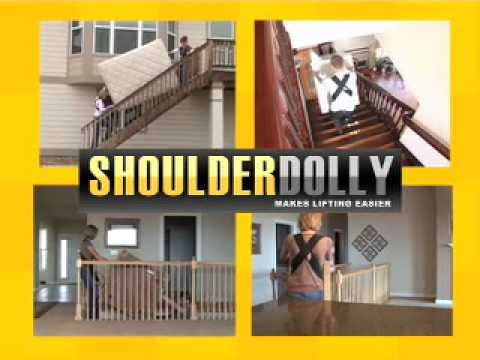
Use shoulder straps by preparing the route, fitting both harnesses, centering the webbing, removing slack, and completing a low test lift. Both movers must use the same commands and lower the object at the first sign of slipping, pain, or imbalance.
Prepare Route and Load
Read the model manual, estimate or verify the object’s weight, and clear rugs, pets, cords, and packaging. Empty furniture, secure doors and drawers, protect corners, and choose one mover to call “lift, stop, lower”.
Inspect Straps and Buckles

Run gloved fingers along the webbing and look for cuts, fuzzy abrasion, melted fibers, chemical stains, broken stitching, and sun fading. Reject cracked, bent, corroded, or poorly engaging buckles and hardware.
Fit the Harnesses. Follow orientation labels and place the harness over the shoulder area, not against the neck. Fasten required torso connections and remove jewelry, loose coats, or drawstrings that could catch.
Center the Straps. Route flat, untwisted webbing beneath a structural support point near the center of gravity. Keep it away from sharp metal, hot surfaces, unfinished edges, weak trim, and glass.
Thread and Tension. Copy the manual’s buckle path exactly and pull out slack while both movers hold a stable squat. Secure loose tails so they can’t drag beneath shoes or snag a doorway.
Perform a Test Lift. Raise the object only two or three inches. Lower it at once if one end rises first, the buckle creeps, contents shift, or either mover feels concentrated neck pressure.
Lift and Walk Together. Rise through controlled leg movement, keep the spine in a comfortable position, and take short synchronized steps. Pause before every turn rather than twisting while the load is moving.
Lower the Load. Agree on the landing point, clear hands and toes, then squat together. Release strap tension only after the object rests securely and can’t roll, tip, or close a pinch gap.
Stairs and Equipment Alternatives
Don’t assume every shoulder harness is approved for stairs. Stair carries magnify load imbalance and fall risk, making an appliance dolly, stair-climbing machine, or moving crew the better choice for many appliances.
Stair Carry Risks
The downhill mover may receive more load and has little escape space if control is lost. Stair nosings can catch the object or abrade webbing, while a tall appliance may block the upper mover’s view and strike a low ceiling.
Stair Safety Checks
Check the exact manual, tread depth, stair width, handrail clearance, landing size, ceiling height, and both movers’ visibility. Keep every bystander out of the downhill drop path and stop if either person can’t hold stable footing.
Shoulder vs Forearm Straps. Shoulder harnesses spread force over more of the upper body and can leave hands available for stabilization. Forearm straps are simpler and less bulky, but they place more pressure on the arms and demand sustained arm positioning.
Shoulder vs Appliance Dolly. Straps fit spaces where wheels can’t turn, yet they keep the load suspended by two people. An appliance dolly transfers much of the weight to wheels and often includes a belt, making it preferable for long, level routes and suitable ramps.
Shoulder vs Furniture Dolly. A low furniture dolly works well on smooth floors with adequate wheel clearance. Use straps for the short lift onto the platform, then roll the load rather than carrying it across an entire workshop or driveway.
When to Hire Movers. Hire trained help for safes, pianos, stone, high-value pieces, hazardous contents, unknown weights, confined stairs, or loads that can’t be test-lifted under control. Mechanical equipment reduces exposure more effectively than asking two people to carry beyond their limits.
Safety Limits and Troubleshooting
Shoulder moving straps may redistribute lifting force, but they can’t guarantee freedom from pain or injury. Stop immediately for slippage, pain, numbness, dizziness, poor visibility, unstable footing, or loss of communication.
Safe Claim Expectations
“Hands-free” means hands may remain available to steady the sides; it doesn’t permit fingers beneath the load. Likewise, “up to 800 pounds” describes a product claim under stated conditions, not permission for two people to carry that weight.
Stop-Use Conditions
Lower the object if webbing shifts, a buckle moves, the route becomes blocked, or either mover can’t maintain posture. The OSHA ergonomics guidance supports controlling workplace risk through task assessment and safer work methods rather than relying on equipment capacity alone.
Load Tilting. Lower it and inspect strap centering, unequal lengths, mover height, off-center contents, drawers, and appliance parts. Don’t correct a severe tilt by leaning sharply because that transfers the imbalance into the movers’ bodies.
Buckle Slippage. Stop use, verify the threading diagram, and inspect for contamination, polishing, deformation, or worn webbing. Never tie a knot behind a defective buckle; knots alter loading and hide damage.
Neck Pressure. Set the object down and reposition the harness according to its diagram. A narrow, burning line beside the neck signals poor placement or a twist, not a pressure that should be endured until the carry ends.
Uneven Mover Heights. Adjust both sides before tensioning and repeat the low test. If the object won’t stay level without one person crouching or leaning, switch mover positions or use wheeled equipment.
Furniture Damage Prevention. Place clean moving blankets or edge protectors between webbing, buckles, and finished surfaces. Test blankets for dye transfer, keep padding dry, and avoid thick loose folds that let the strap slide.
Medical and Workplace Safety. People with shoulder, back, knee, heart, balance, or mobility concerns should get suitable medical guidance before heavy lifting. Workplace use also requires employer procedures, equipment records, training, and any applicable material-handling rules.
Replacement Straps and Maintenance
Replace lifting webbing when damage appears, and match every replacement to the exact harness model. Similar width or color doesn’t prove that third-party webbing has the right buckle fit, stitching, length, or rating.
Replacement Compatibility
Keep the original manual and model label with the harnesses. Confirm the replacement’s stated compatibility, included lengths, buckle path, and intended configuration before discarding the old straps.
This replacement strap set provides three lengths for compatible ShoulderDolly systems.

Shoulder Dolly Replacement Straps
- Replacement straps for Shoulder Dolly systems
- Includes three strap lengths for flexibility
- Fits a range of furniture sizes
- Useful for replacing worn accessories
- Keeps your lifting system ready
Buy on Amazon
Webbing Retirement Signs
Retire straps with cuts, edge wear, glazed patches, melted fibers, chemical exposure, broken stitching, severe fading, stiffness, or permanent deformation. Don’t tape, sew, knot, or heat-seal damaged load-bearing webbing as a home repair.
Cleaning and Storage. Follow the maker’s cleaning directions and avoid bleach, harsh solvents, and high heat without written approval. Air-dry damp straps fully, then store them away from sunlight, moisture, chemicals, heaters, and sharp workshop tools.
Price and Purchase Checklist
Compare the total delivered cost, not the headline listing amount. A cheaper offer may omit a harness, include replacement straps only, charge more for shipping, or provide weaker return terms.
Compare Delivered Costs
Record the checkout price on the purchase day, shipping, delivery date, taxes, included components, and replacement-part cost. Compare that total with renting an appliance dolly or paying movers for the single difficult object.
Verify Package Contents
A complete two-person Shoulder Dolly kit should identify its harness count, center straps, adjustment hardware, and instructions. Read the selected variation details because marketplace reviews and photographs can combine several different bundles.
Check Model Specifications. Match the model name and number to the manual, then verify capacity, webbing dimensions, mover fit, approved uses, and household or commercial classification. Don’t infer a specification from a product name.
Confirm Seller Authenticity. Check who sells and ships the item, inspect branding and model labels, and compare the listing with manufacturer documentation. A familiar product photograph doesn’t prove that the selected variation is an authentic complete kit.
Review Warranty and Returns. Read the return window, opened-product rules, warranty process, and buyer-paid shipping terms before ordering. Test harness fit without loading the system so an unsuitable size remains clean and returnable.
Consider Rental Alternatives. For one refrigerator or washer, renting an appliance dolly may cost less and reduce suspended carrying. Frequent furniture moves can justify owning straps, while machinery, stairs, and dense shop equipment often justify trained movers instead.
FAQs
What Is A Shoulder Dolly And How Does It Work?
A Shoulder Dolly is a two-person moving system that uses shoulder harnesses and lifting straps to help carry heavy items. Each person wears a harness, and the adjustable strap passes beneath the item to share its weight. It encourages upright posture and can make bulky furniture easier to control when used correctly.
How Much Weight Can Shoulder Dolly Straps Hold?
Shoulder Dolly straps are commonly rated to hold up to 800 pounds when used as directed. The practical limit also depends on the item shape, strap condition, floor surface, and the ability of both movers. Never exceed the manufacturer’s rating, and use a different method for unstable, oversized, or damaged loads.
Can Shoulder Dolly Straps Be Used On Stairs?
Shoulder Dolly straps can be used on stairs, but stairs require extra caution and planning. Use two capable people, keep the load balanced, communicate every step, and ensure the path is clear. For very heavy or awkward items, use professional movers or specialized stair equipment instead.
Can One Person Use A Shoulder Dolly?
No, a Shoulder Dolly is designed for two people rather than one person. The harness and strap system relies on both movers sharing the load and balancing the item. Trying to use it alone can cause poor control, injury, or damage, especially with furniture and appliances.
Are Shoulder Straps Better Than Forearm Moving Straps?
Shoulder moving straps are not always better than forearm straps; the better choice depends on the load and the movers. Shoulder systems can promote a more upright posture and may feel more comfortable for tall or bulky items. Forearm straps can offer lower lifting leverage, but they may require more bending and careful technique.


