


A metal pegboard stores tools on rigid steel panels using round holes, slots, or both. Choose one by measuring the wall, checking hook compatibility, matching the mounting method to the wall, and comparing usable accessories rather than advertised piece counts.
Metal peg boards resist torn holes and moisture damage better than fiberboard, yet their safe load still depends on the weakest installed component: hook, panel, screw, anchor, stud, or masonry substrate.
Table of Contents
Metal Pegboard Kits Compared
The most useful kit depends on whether you need a galvanized panel system, a coordinated toolboard, broad wall coverage, or many hooks. Treat capacity, gauge, hole spacing, hardware, and warranty as undisclosed when the seller doesn’t publish traceable specifications.
These four kits represent established system panels, a complete workshop kit, a large six-panel arrangement, and an eight-panel modular set.

Wall Control Galvanized Pegboard Pack
- Galvanized steel provides durable tool organization
- Metal panels resist warping compared with fiberboard
- Creates easy-access storage above the workbench
- Compatible with Wall Control pegboard accessories
- Industrial finish suits garage and workshop spaces
 Buy on Amazon

Wall Control 4 Foot Toolboard Kit
- Complete metal pegboard kit simplifies tool organization
- Four foot toolboard offers substantial wall storage
- Matching black accessories create a coordinated setup
- Keeps tools visible reachable and off the workbench
- Durable design is ideal for workshops and garages
Buy on Amazon

INCLY Large Metal Pegboard Kit
- Large 48 by 36 inch setup maximizes wall storage
- Six panels create a customizable organizer layout
- Includes 234 pegboard accessories for versatile organization
- Sturdy metal design supports workshop and garage tools
- Keeps workbench essentials visible and within reach
Buy on Amazon

Spampur 8 Panel Pegboard Kit
- Eight panels create an expansive storage wall
- Includes 50 hooks for organized tool access
- Heavy-duty metal construction supports daily use
- Ideal for garage craft room kitchen or office storage
- Modular layout can fit a variety of wall spaces
Buy on Amazon
| Product | Supplied configuration | Finish or material | Accessory notes | Good fit | Specs to verify |
|---|---|---|---|---|---|
| Wall Control Galvanized Pack | Commonly sold as two panels | Galvanized steel | System accessories may be separate | Workshop or garage | Package contents, hardware, warranty |
| Wall Control Toolboard Kit | Approximate four-foot arrangement | Black coated steel | Matching tool holders included | Coordinated tool wall | Exact layout and load conditions |
| INCLY Large Pegboard Kit | Six panels; stated 48 × 36 inches | Coated metal | Stated 234 pieces | Large wall coverage | Gauge, itemized accessories, capacity |
| Spampur Eight-Panel Kit | Eight modular panels | Coated metal | Stated 50 hooks | Flexible room layouts | Panel dimensions, spacing, hardware |
| Spampur Four-Panel Set | Four panels | Black steel design | Stated 50 hooks | Smaller work area | Coverage and load testing |
| Ultrawall Garage Panels | Four panels | Coated steel | Varies by package | Garage storage | Hook format and included fasteners |
| Wall Control Black Panels | Two tall panels | Black coated steel | Round-hole and system accessory options | Narrow vertical space | Accessories included in selected package |
| Spampur Black Panel Set | Four panels | Black coated metal | Package-dependent | Office, craft room, or garage | Hole spacing and replacement parts |
| PBHEPJ Ten-Panel Set | Ten panels | Not disclosed | Screws and drywall anchors stated | Wide modular wall | Gauge, capacity, warranty |
| Organizer With Hooks | Four panels | Not disclosed | Stated 50 hooks | Basic starter layout | Panel dimensions and hook types |
Wall Control Galvanized Pack
The galvanized pack suits garages where humidity and minor condensation make untreated hardboard a poor choice. Wall Control commonly lists 16 × 32-inch panels and support for round-hole pegs plus its slotted accessories, but confirm the selected package on the Wall Control website because panel-only and kit contents differ.
Wall Control Toolboard Kit
The toolboard kit works for buyers who want matching holders without assembling a system piece by piece. Read “four foot” as a configuration description until the listed width and height confirm its orientation; buyers often mistake it for panel height.
INCLY Large Pegboard Kit. Its supplied 48 × 36-inch arrangement covers 12 square feet, assuming those figures describe the assembled face. The 234-piece label needs an itemized check because screws, anchors, spacers, clips, and tiny hooks may each count as one accessory.
Spampur Eight-Panel Kit. Eight panels allow staggered or separated layouts around cabinets and outlets. Confirm whether all 50 stated pieces are load-bearing hooks rather than a mixture of fasteners and retainers.
Spampur Four-Panel Set. This smaller black set is easier to fit over a compact bench. Check the individual panel dimensions; a package photo can make a four-panel arrangement look much wider than its measured coverage.
Ultrawall Garage Panels. These modular panels suit garages where future expansion matters. Before mixing brands, measure round holes, slots, center spacing, and rear clearance rather than relying on similar-looking product photos.
Wall Control Black Panels. The dark finish gives a cleaner visual backdrop in workshops and offices. Scraped edges can reveal carbon steel, so touch up deep chips before humid air leaves an orange halo around the damaged spot.
Spampur Black Panel Set. Four-panel packages work well for stationery, craft tools, and compact hand tools. Decorative drywall installations still need anchors matched to the wall condition and the outward leverage created by long hooks.
PBHEPJ Ten-Panel Set. Ten small panels make it easier to work around irregular walls, but extra seams reduce uninterrupted shelf placement. Included drywall anchors shouldn’t be treated as proof of a verified installed capacity.
Organizer With Hooks. A four-panel, 50-hook package can be a practical starter set when the hooks match your tools. Count double hooks, long hooks, bins, and holders separately before comparing it with a panel-only offer.
How to Choose Metal Pegboard
Choose metal pegboard by checking wall coverage first, followed by tool geometry, wall substrate, hook format, finish, kit contents, expansion parts, and full installed cost. A rigid panel can still perform poorly if its anchors rotate or its hooks lift out.
- Measure clear wall width and height.
- Mark studs, outlets, switches, cabinets, and door swings.
- List the tools, shelves, and bins you plan to hang.
- Confirm hole diameter, spacing, slots, and hook locks.
- Check mounting instructions and disclosed test conditions.
- Price the panels, useful accessories, fasteners, and delivery together.
Wall Size and Coverage
Measure the clear usable rectangle, not the full wall. Subtract cabinets, switch plates, lighting, door movement, and the vertical space needed to lift a tool above its hook; that last clearance is often missed over shallow shelves.
Dimensions and Coverage Math
Calculate square feet as width in inches × height in inches ÷ 144. A 16 × 32-inch panel covers about 3.56 square feet, two cover about 7.11 square feet, and a 48 × 36-inch arrangement covers 12 square feet before gaps or unusable seams.
Hole and Hook Compatibility. Conventional full-size pegboard often uses roughly 1/4-inch holes on 1-inch centers, but metal systems also use slots, keyholes, and brand-specific shapes. A hook passing through the opening doesn’t prove that it locks at the right angle or safely supports a shelf.
Steel Gauge and Capacity. A lower steel-gauge number commonly means thicker sheet within the same gauge standard, yet gauge alone doesn’t state installed capacity. Formed edges, mounting-point spacing, fastener embedment, hook projection, and wall material all change the result.
Finish and Rust Resistance. Galvanizing protects steel with zinc, while powder coating creates a colored barrier over the surface. Neither makes damaged carbon steel immune to rust; wet tools, salty residue, cut edges, and deep scratches raise corrosion risk.
Included Kit Accessories. Sort kit contents into short hooks, long hooks, double hooks, holders, shelves, bins, clips, spacers, screws, and anchors. Twenty useful holders can offer more value than 200 pieces dominated by small fasteners.
Expansion and Replacement Parts. Check whether matching hooks, bins, shelves, and clips remain available outside the original kit. Proprietary systems can lock more firmly, while generic round-hole systems often make replacement hooks cheaper and easier to source.
Total Installed Cost. Add panels, accessories, wall hardware, spacers, delivery, coating repair, and future expansion pieces. Comparing a bare panel against a complete kit hides the cost of making the bare panel useful.
Metal Pegboard Material Comparisons
Metal pegboard offers stiffer holes and edges than hardboard or MDF, but it costs more and can rust where protective finishes fail. Plastic avoids red rust, while slatwall works better for broad baskets and shelves.
Metal Versus Hardboard
Steel resists hook-hole tear-out and moisture swelling better than ordinary hardboard. Hardboard remains cheaper and easier to cut with common woodworking tools, and its standard hole pattern often accepts widely available hooks.
Metal Versus MDF
MDF provides a smooth painted face but carries more weight than thin hardboard and loses strength after water enters exposed fibers. Metal is a better choice above a damp workbench area, provided scratches receive timely repair.
Metal Versus Plastic. Steel feels cool and rigid under the fingertips, while thin plastic may flex with a faint creak as a loaded hook moves. Plastic won’t develop red rust, yet many plastic systems rely on proprietary connectors and lower-temperature environments.
Pegboard Versus Slatwall. Pegboard gives dense positions for small hand tools. Slatwall makes horizontal repositioning easier and accepts larger retail-style baskets, though panels and accessories often project farther into the room.
Galvanized Versus Powder-Coated. Galvanized steel has a mottled industrial surface and zinc corrosion protection. Powder-coated panels offer uniform color, but a hard tool corner can chip the coating and expose a bright steel nick that later turns orange.
Stainless Versus Painted Steel. Stainless steel offers stronger corrosion resistance in many indoor settings but costs more and isn’t always magnetic. Painted carbon steel is common and affordable; its performance rests heavily on surface preparation and coverage at holes and edges.
Metal Pegboard by Use Case
A garage needs secure mounting and corrosion protection, while craft rooms, kitchens, offices, and shops place more weight on small-item access, appearance, cleaning, or repeated rearrangement. Match the accessory mix to the objects rather than the room label printed on the box.
Garage and Workshop
Garage installations benefit from stud mounting, double hooks, corrosion-resistant fasteners, and openly stated load conditions. Store pliers, wrenches, measuring tools, smaller clamps, and light accessories on suitable holders; keep heavy machines on stable benches or cabinets.
Craft Room Storage
Craft storage works best with shallow bins and labels that keep beads, thread, cutters, and tape visible. Place scissors and rotary blades beyond children’s reach, and avoid deep bins that hide the holes needed for nearby hooks.
Kitchen Organization. Use manufacturer-approved cleaners and keep the panel away from burners, persistent steam, splattering grease, and food-preparation contact. A product marketed for storage shouldn’t be assumed safe as a direct food-contact surface.
Office and Gaming. A black metal pegboard can hold headphones, controllers, cables, and stationery with a low-profile modern look. Route cables so they don’t pull hooks upward, and keep small shelves close to studs or secure mounting points.
Retail Product Displays. Metal panels suit packaged merchandise and rotating displays because hooks can move without tearing fiberboard holes. Commercial layouts need locking hooks, dependable replacement parts, and aisle clearances that prevent protruding accessories from catching clothing or bags.
Metal Pegboard Installation

Install metal pegboard by establishing one level reference line, locating sound mounting points, and preserving enough rear clearance for each hook. Stud attachment is preferred for heavier workshop loads; drywall and masonry need substrate-specific hardware.
Layout and Wall Planning
Arrange tools on the bench or floor before drilling. Keep frequently used items between waist and shoulder height, leave room above long hooks, and avoid electrical panels, plumbing access, outlets, switches, lights, and moving cabinet doors.
A panel above a drill press table needs extra clearance for tall workpieces and moving handles. A cool metal surface can hide sharp burrs, so run a folded cloth lightly along accessible edges rather than sliding a bare finger over them.
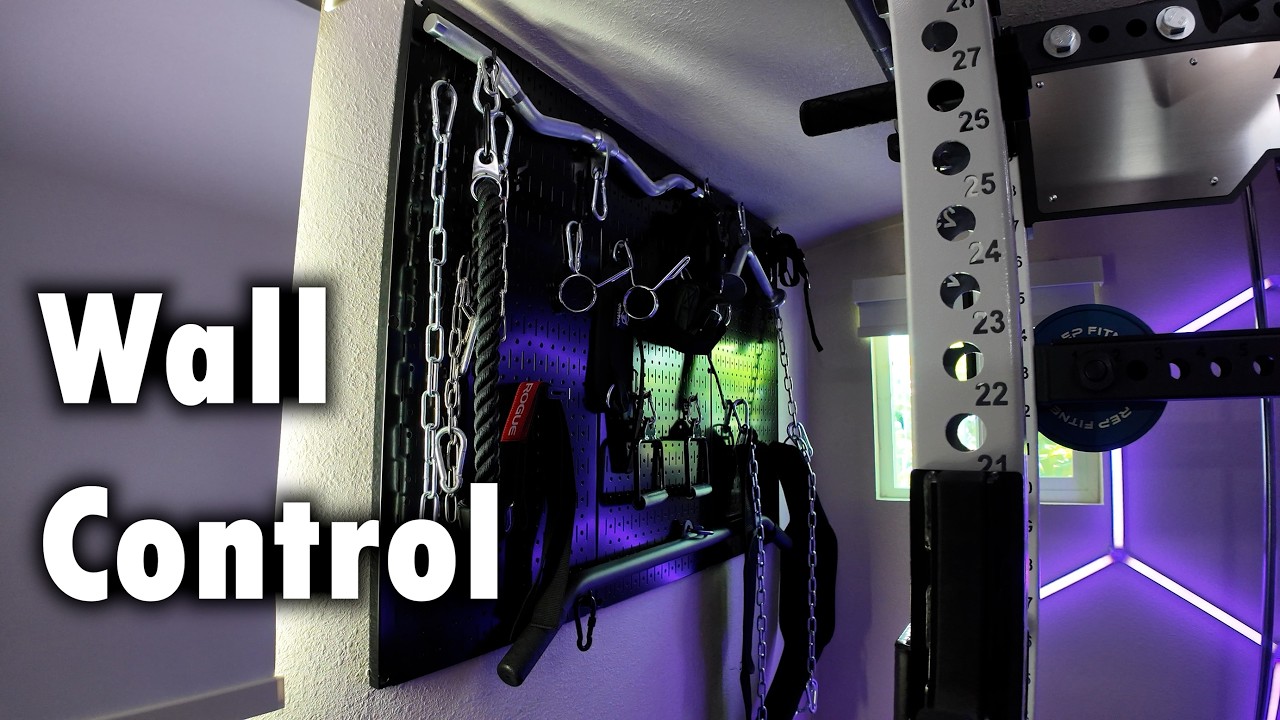
Mounting to Wood Studs
Find the center of each stud and follow the panel maker’s mounting pattern. Screw length must account for the panel flange, drywall, and required wood embedment, so a single universal screw length isn’t suitable for every wall assembly.
Mounting to Drywall. Use anchors permitted by both the panel maker and anchor maker, and inspect the drywall for previous damage. Never add several anchor ratings together and call the sum the pegboard capacity; loads rarely distribute equally across every fastener.
Stop if an anchor spins, crushes the paper face, or creeps forward under load. The CPSC Home Electrical Safety Checklist also reinforces checking home electrical hazards before drilling or adding workshop installations.
Mounting to Masonry. Identify solid concrete, brick, hollow block, or veneer before choosing fasteners. Drill using the hardware maker’s stated diameter and depth, manage silica-containing dust, and avoid weak mortar joints when the fastener instructions call for solid masonry.
Spacing and Rear Clearance. Round hooks need empty space behind the panel so their tips can enter and rotate. Formed metal flanges may create this stand-off; flat sheets often need spacers or furring strips.
Panel Alignment and Seams. Mark one level line rather than measuring every panel from an uneven floor or bench. Dry-fit adjacent panels before drilling because folded flanges can change seam spacing and stop a shelf from spanning two panels.
Common Failures and Prevention
The most common failures are lifting hooks, moving anchors, flexing panels, chipped finishes, incompatible accessories, and uneven seams. Most appear after tools are rearranged because the new position changes leverage and concentrates load between fasteners.
Hooks Lifting Out
A loose hook can rise with the tool and clatter onto the bench. Fit locking clips, match wire diameter to the hole, and pull tools outward before lifting; awkward tools sit more securely on double-arm holders.
Panels Pulling Away
Panels pull away when anchors loosen, drywall breaks, screws miss studs, or projecting shelves create excessive torque. Move heavy objects close to the wall, attach to framing where possible, and unload the panel before replacing a failed anchor.
Panel Flexing. A thin panel may pop inward and outward with a dull metallic snap, often called oil-canning. Use every specified mounting point, correct wall irregularities, and spread dense tool groups across several attachment zones.
Scratched Finish and Rust. Bare steel at a chip can develop gritty orange residue after humid weather. Clean and dry the spot, remove loose corrosion using a method approved for the finish, and apply compatible touch-up coating.
Incompatible Accessories. Similar-looking holes don’t confirm a fit. Measure diameter, center spacing, slot shape, hook wire, entry angle, panel depth, and locking method before ordering a large accessory batch.
Misaligned Panels. Starting from a sloped floor produces stepped seams and crooked shelves. Snap or draw one level reference, mark all panel widths from the same origin, and use the actual panel as a drilling template when its instructions allow.
Practical Notes From Real-World Use. Tool shape matters as much as weight: a long mallet or shelf places more outward force on the wall than compact pliers of equal mass. Leave one empty hole column near seams, test one example of each hook style, and photograph the wall before loading it so later movement becomes easy to spot.
Pricing, Specifications, and Verification
Compare metal pegboard by installed cost per area, useful accessory count, documented capacity conditions, mounting hardware, replacement-part access, and warranty. Product price alone gives a distorted comparison when one package includes holders and another contains bare panels.
Cost Per Square Foot
Divide the selling price by usable panel area in square feet. For a 48 × 36-inch system, divide the price by 12 square feet, then state whether delivery, hooks, hardware, and tax are included in your comparison.
Cost Per Useful Accessory
Count load-bearing hooks, bins, shelves, and specialized holders separately from screws, anchors, spacers, and clips. Calculate kit premium ÷ useful accessories to expose whether a large headline count provides practical value.
Panel-Only Versus Kits. Panel-only packages suit buyers who already own compatible hooks or need specialized holders. Kits reduce initial sourcing work, but surplus short hooks and unsuitable anchors can erase their apparent savings.
Verified Capacity Claims. Accept a load figure only when its source identifies per-hook or per-panel capacity, point or distributed loading, wall substrate, fasteners, and test conditions. “Heavy-duty” without those details is marketing language, not a measurable rating.
Disclosed Versus Missing Specs. Record panel dimensions, steel thickness or gauge, hole format, spacing, finish, hardware, capacity conditions, and warranty. Write “not disclosed” for missing facts rather than estimating them from photographs or product weight.
| Claim to check | Acceptable evidence | Warning sign |
|---|---|---|
| Panel dimensions | Dimensioned manufacturer drawing | Only total package dimensions shown |
| Weight capacity | Rating with substrate and fasteners named | “Heavy-duty” with no test conditions |
| Hook compatibility | Hole and slot measurements | “Universal” with no dimensions |
| Accessory count | Itemized contents list | Fasteners mixed into one large total |
| Corrosion protection | Finish type and care directions | “Rustproof” without material details |
| Warranty | Written terms from the maker | Marketplace badge without linked terms |
Hardware and Warranty Checks. Confirm screw and anchor types, required mounting-hole use, substrate limits, exclusions for modified panels, and replacement-part coverage. Cutting a panel can remove a folded flange, expose sharp steel, damage the finish, and affect warranty rights.
Live Price Verification. Check the selling price, delivery charge, coupon terms, stock status, package variation, and seller immediately before purchase or publication. Record the date and selected configuration because marketplace pages often place several sizes and accessory bundles under one listing.
FAQs
Is Metal Pegboard Better Than Wood Pegboard?
Metal pegboard is usually better than wood pegboard for heavy tools, durability, and easy cleaning. It resists warping, splintering, and moisture better than wood, making it a strong choice for garages and workshops. Wood pegboard can still be a budget-friendly option for lightweight storage indoors.
How Much Weight Can A Metal Pegboard Hold?
A metal pegboard can often hold 100 to 300 pounds or more when it is properly mounted. Its actual capacity depends on the panel size, mounting hardware, wall material, and how evenly the tools are distributed. Always follow the manufacturer’s weight rating and secure heavy items into wall studs when possible.
Do Standard Pegboard Hooks Fit Metal Pegboard?
Standard pegboard hooks may fit metal pegboard, but compatibility depends on the hole size and spacing. Many metal panels use common 1/4-inch holes, while others require brand-specific hooks or accessories. Check the product specifications before buying hooks to ensure they lock securely and support your tools safely.
Can Metal Pegboard Be Mounted Directly On Drywall?
Metal pegboard can be mounted on drywall, but attaching it directly without proper anchors is not recommended for heavy storage. For the strongest installation, fasten the panel into wall studs using suitable screws. If studs are unavailable, use heavy-duty drywall anchors rated for the expected load.
Does Metal Pegboard Rust In A Humid Garage?
Metal pegboard can rust in a humid garage if its protective coating becomes damaged or it is exposed to frequent moisture. Powder-coated, galvanized, or stainless-steel panels offer better corrosion resistance. Keep the garage ventilated, wipe away condensation, and repair scratches promptly to help protect the finish.


