

Wood storage should match the material: ventilated racks suit firewood, supported racks protect lumber, and enclosed boxes or drawers organize household items. Choose by usable capacity, moisture exposure, load rating, access clearance, and installation method rather than appearance alone.
Table of Contents
Compare Wood Storage Types
The best system depends on what you’re storing and where it will sit. Firewood needs airflow, long lumber needs evenly spaced support, sheet goods need broad restraint, and household storage needs safe lids or drawers.
Use-Case Selector
- Outdoor firewood: An elevated steel rack with an open-sided top cover.
- Indoor hearth supply: A compact hoop or log holder with a debris tray.
- Long boards: A horizontal wall rack fixed to studs or approved masonry anchors.
- Plywood and MDF: A restrained vertical cart, panel bay, or flat rack.
- Small offcuts: Divided bins labeled by material and minimum useful length.
- Household objects: A wooden storage box, chest, cabinet, or drawer unit.
Storage Type Comparison
| Storage type | Best use | Weather protection | Installation | Typical planning range | Main risk |
|---|---|---|---|---|---|
| Firewood rack | Split logs | Top cover recommended | Freestanding | $30–$200+ | Trapped moisture or unstable stacking |
| Lumber wall rack | Long boards and molding | Indoor use preferred | Structural wall mounting | $40–$250+ | Anchor pullout or bent arms |
| Freestanding lumber rack | Heavy workshop stock | Varies by finish | Level floor; anchoring may apply | $100–$600+ | Tip-over or floor overloading |
| Sheet-goods cart | Plywood, OSB, and MDF | Indoor, dry location | Assembly and locking casters | $100–$500+ | Panel tipping |
| Wooden storage box | Toys, tools, blankets, keepsakes | Usually indoor only | Little or none | $20–$150+ | Lid entrapment or damp contents |
| Wood storage drawers | Tools, clothing, crafts, hardware | Indoor use | Anti-tip anchoring for tall units | $50–$500+ | Tip-over or bottom failure |
| Outdoor storage shed | Large log or lumber inventory | High with ventilation | Foundation and assembly | $500–$5,000+ | Rot, poor airflow, or weak flooring |
Comparison Criteria. Compare internal dimensions, load distribution, frame material, coating, replacement parts, ventilation, anchor requirements, assembly time, and access space. Exterior width can mislead: thick walls, end frames, drawer slides, and lid hardware all reduce usable capacity.
Typical Price Ranges. These figures work as budgeting bands rather than retailer quotes. Steel thickness, hardwood species, finish, shipping weight, included covers, drawer hardware, foundations, and paid assembly can move the final cost far beyond the product price.
Choose the Right Wood Storage System
Choose a wood storage system by checking contents, location, dimensions, verified capacity, and access before comparing style. A rack or cabinet that fits the wall can still block a door, garage track, electrical panel, or safe walking route.
Contents and Location
Raw wood and household goods need different storage conditions. Logs release moisture and debris, lumber can bow under poor support, while clothing and documents need a clean enclosure without damp wood, exposed fasteners, or scent transfer from cedar.
Place frequently handled stock between knee and shoulder height where practical. Dense hardwood, wet logs, and sheet goods belong lower because lifting them overhead feels unstable; a full MDF sheet pulls hard against the fingers and can gain momentum quickly if it starts tipping.
Space and Clearance
Measure width, depth, height, baseboards, door swing, vehicle clearance, and the route used to load material. For full-extension drawers, add the complete drawer depth to the cabinet footprint and leave standing room in front.
Long lumber needs side clearance for removal without sweeping across machinery or windows. Planning storage beside a stable workshop table can shorten handling distance, but projecting boards must stay outside the operator’s movement zone.
Capacity and Load Ratings. Separate total capacity from capacity per arm, shelf, drawer, or caster. Published ratings often assume an evenly distributed load, approved fasteners, correct stud spacing, a level frame, and material placed across every support.
Materials and Corrosion. Powder-coated steel works well indoors and in sheltered exterior areas, yet scratches and low weld pockets can rust. Galvanized fasteners, drainage, touch-up coating, and raised feet slow corrosion where rainwater or condensation collects.
Access and Organization. Sort boards by species, thickness, length, and project status. Removable painter’s-tape labels cope with changing stock, while shallow labeled drawers stop screws and small fittings from forming a heavy, mixed layer at the back.
Assembly and Portability. Check required tools, component weight, adjustment limits, replacement hardware, and whether assembly needs two people. Mobile carts need locking casters rated for the combined cabinet and contents, plus a smooth floor without cords, thresholds, or deep cracks.
Firewood Storage and Rack Options
The best firewood storage keeps logs raised and ventilated while shielding the top from precipitation. Burn wood only after a freshly split face reads 20% moisture or less, rather than judging dryness from gray bark or storage time.
Moisture and Seasoning
The EPA Burn Wise guidance recommends burning firewood at 20% moisture or less. Split a test log and press a calibrated pin meter into the new inner face; outside surfaces dry earlier and can give deceptively low readings.
Split wood often needs at least six months, while dense hardwood, large rounds, shade, and humid weather can extend drying far beyond one season. Properly seasoned pieces feel lighter, show end checks, and make a sharper clack; wet pieces strike with a dull, heavy thud.
Airflow and Weather Protection
Raise the first course on a rack, pallet, concrete support, or treated runners. Protect the top and upper windward edge, but leave side gaps; a ground-length plastic cover can create a warm, clammy pocket where bark smells sour and mold develops.
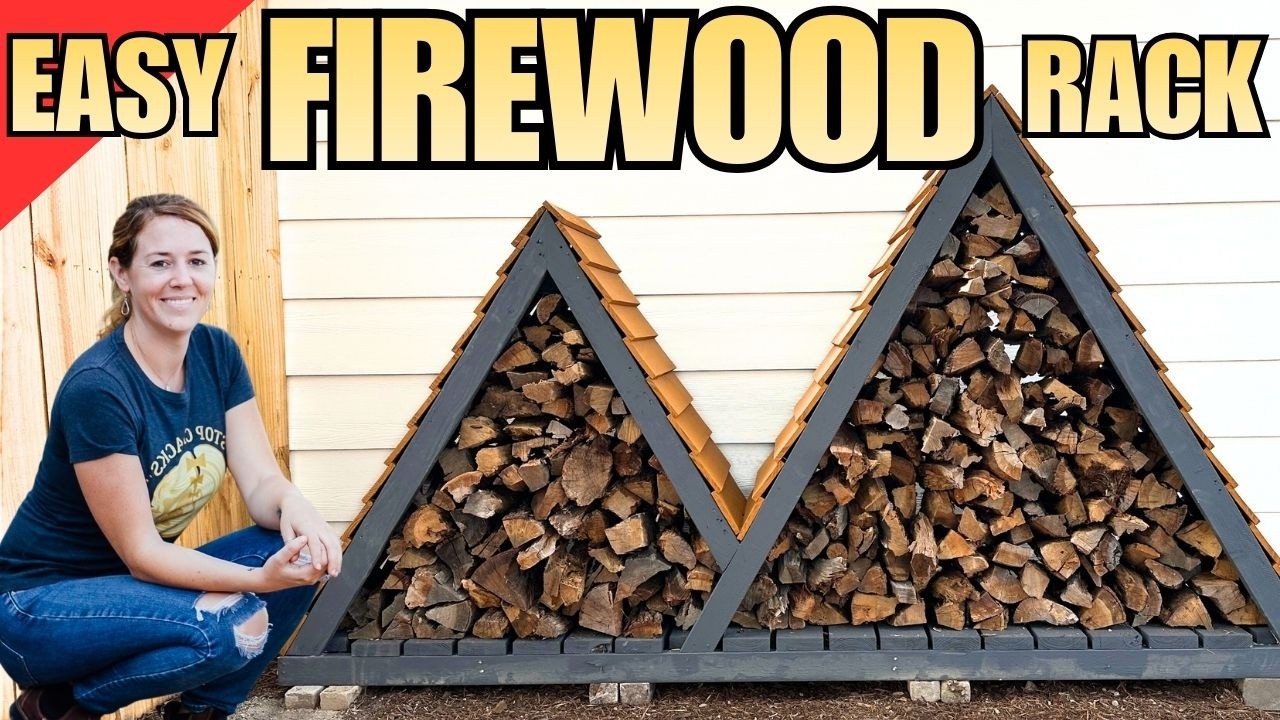
Cord Capacity Formula. A full cord occupies 128 stacked cubic feet, traditionally 4 feet high by 4 feet deep by 8 feet long. Multiply rack width × stacked height × log depth, then divide by 128; a 4 × 4 × 1.33-foot stack holds about 0.17 cord, not half a cord.
Terms such as face cord, rick, and rack vary by region. Ask for all three dimensions before buying logs, since a four-foot rack’s capacity changes with stack height and whether it holds 12-, 16-, or 24-inch pieces.
Indoor Storage Risks. Keep only a small ready-to-burn supply indoors. Logs can carry beetles, spiders, fungal material, loose bark, and water; follow the stove or fireplace manual and local fire rules for clearances from appliances, chimneys, exits, and utility equipment.
Outdoor Firewood Racks. Compare assembled depth with log length, frame-wall thickness, total capacity, adjustment method, foot spacing, cover ventilation, and replacement-cover availability. An adjustable frame can rack sideways when extended if its joints and base lack adequate bracing.
These outdoor rack options cover adjustable, covered, and four-foot configurations.

Adjustable 4 ft Firewood Rack
- Adjustable frame fits changing woodpile needs
- Eight legs provide stable balanced support
- Heavy-duty tubular steel handles stacked logs
- Weather-resistant finish suits outdoor storage
- Easy assembly gets your firewood organized fast
 Buy on Amazon

Covered 4 ft Firewood Rack
- Includes a waterproof cover for protected firewood
- Adjustable rack accommodates different log piles
- Heavy-duty frame provides reliable support
- Keeps wood elevated and organized outdoors
- Suitable for patios fireplaces and indoor storage
Buy on Amazon
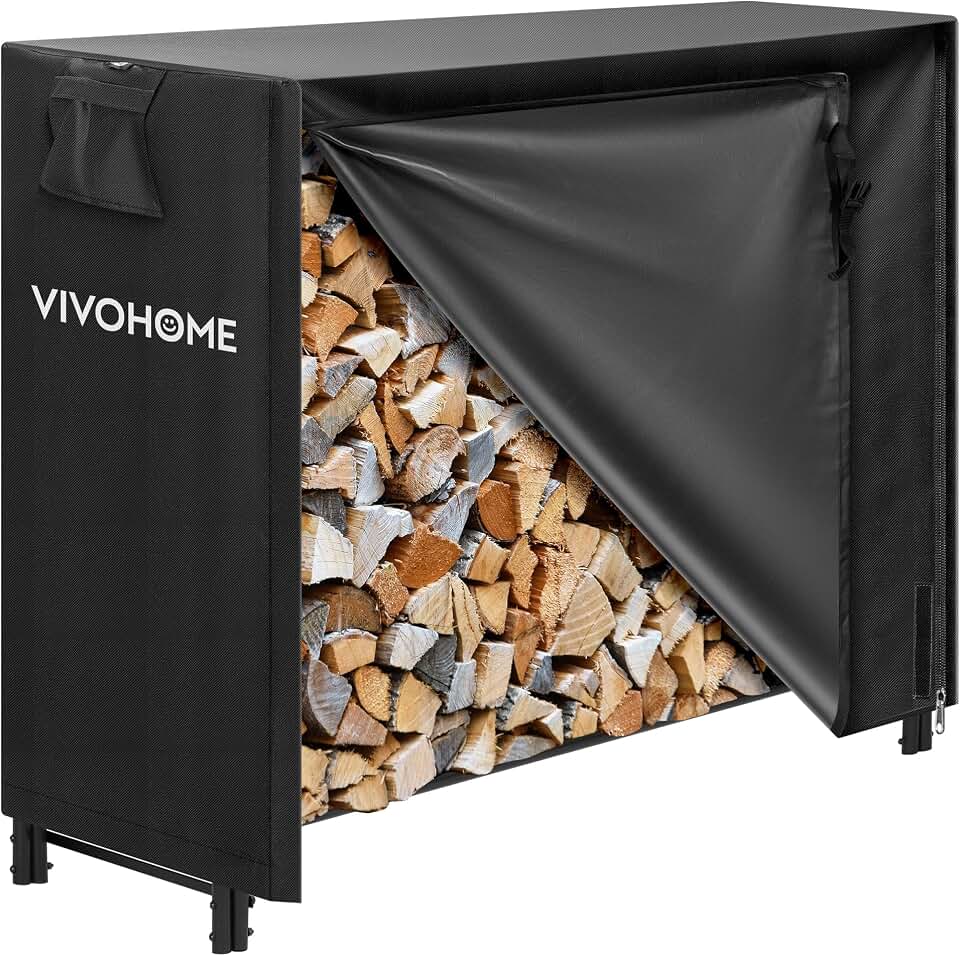
VIVOHOME 4 ft Covered Wood Rack
- Four-foot rack keeps firewood stacked neatly
- Zippered cover helps protect logs from rain and debris
- Heavy-duty construction provides dependable support
- Elevated storage promotes cleaner more organized woodpiles
- Great for outdoor fireplaces patios and decks
Buy on Amazon
Hearth and Patio Storage. A log hoop holds a working supply rather than a seasoning pile. Load curved holders evenly, check that the base doesn’t rock, and use a noncombustible tray where gritty bark could scratch flooring or mark pale stone.
These compact log holders suit hearths, covered patios, and short-term access.

VIVOHOME Covered Log Hoop
- Compact 32-inch hoop stores logs in style
- Included zippered cover helps shield wood from weather
- Heavy-duty frame supports a tidy firewood supply
- Round design adds a decorative touch to any hearth
- Great for patios decks porches and indoor fireplaces
Buy on Amazon

Matte Black 4 ft Log Rack
- Four-foot capacity holds a ready supply of firewood
- Heavy-duty metal frame supports stacked logs
- Raised design helps keep wood dry and tidy
- Matte black finish complements indoor or outdoor spaces
- Ideal for fireplaces fire pits and patios
Buy on Amazon
Custom-Length Storage. Bracket kits let you set rack length, but they often exclude dimensional lumber, structural screws, finish, base pads, and braces. Confirm the required board size and manufacturer’s span limit before cutting; making the rails longer can reduce lateral stability.

MOFEEZ Adjustable Firewood Brackets
- Bracket kit lets you build a rack to your preferred length
- Adjustable design adapts to available storage space
- Creates a custom firewood holder with your own lumber
- Keeps logs organized for easy access
- Ideal for patios garages and fireplace areas
Buy on Amazon
Lumber Storage for Workshops
Workshop lumber storage must support boards at multiple aligned points, keep heavy material low, and restrain stock from sliding or tipping. Wall racks save floor area, while vertical bays and carts can make sheet goods easier to sort in small shops.
Horizontal Wall Racks
Horizontal racks work well for long boards, molding, conduit, and pipe. Support spacing depends on species, thickness, moisture, and time under load; thin boards need closer arms because long-term creep can leave a permanent bow.
Mount heavy stock on lower levels and add end stops for smooth boards or round material. A nearby metal pegboard can hold measuring and marking tools without mixing them into lumber bays.
Lumber Rack Options
Compare rack options by capacity per level, arm depth, stud-spacing requirements, approved fasteners, end-stop design, and whether the rating assumes every bracket shares the load. A large total rating means little if one short, dense stack sits on a single arm.
These wall-mounted lumber racks offer three, six, and eight storage levels.

Space-Saving Lumber Wall Rack
- Three-tier design keeps boards sorted
- Wall-mounted storage frees up floor space
- Sturdy metal construction supports lumber securely
- Four-pack offers flexible storage setup
- Suitable for garage workshop or outdoor use
Buy on Amazon

BORA Six-Level Lumber Rack
- Six storage levels organize boards by size
- Wall-mounted design clears valuable floor space
- Keeps lumber accessible for every project
- Durable rack suits busy workshops and garages
- Ideal for storing long wood pieces neatly
Buy on Amazon

Adjustable Eight-Level Lumber Rack
- Eight adjustable levels sort lumber efficiently
- Four-pack supports up to 1040 pounds
- Removable arms adapt to changing storage needs
- Heavy-duty metal construction handles workshop demands
- Wall-mounted layout saves garage and basement floor space
Buy on Amazon
Vertical Lumber Storage. Vertical bays save wall length but need a lower divided bin and upper retaining rail. Loosely leaning boards can fan outward when one piece is pulled, and angled storage can set a bow into flexible stock.
Sheet-Goods Storage. Plywood, OSB, and MDF need broad support through a restrained vertical bay, A-frame cart, or flat rack. Never stand panels directly on damp concrete; MDF edges absorb water quickly, swell rough to the touch, and seldom return flat.
Scrap and Offcut Bins. Separate hardwood blocks, long strips, panel offcuts, turning blanks, and burn-only waste. Mark each bin with a maximum or minimum length so sharp scraps don’t disappear into a deep box and accumulate beyond practical use.
Board-Foot Formula. Calculate board feet as thickness in inches × width in inches × length in feet ÷ 12. A 1 × 8 × 10-foot board equals 6.67 board feet, though dressed dimensions, species density, and moisture determine its actual rack load.
Moisture and Acclimation. Wood exchanges moisture with surrounding air, which changes dimensions across the grain. The USDA Wood Handbook explains wood-moisture behavior; use aligned dry stickers and measure boards before moving them into conditioned project storage.
Safe Workshop Stacking. The OSHA material-handling standard caps manually handled lumber stacks at 16 feet and mechanically handled stacks at 20 feet. Those are workplace limits, not sensible home targets; garage stacks should remain low enough to reach without climbing.
Wooden Boxes and Wood Storage Drawers
A wooden box suits bulky or infrequently used objects, while wood storage drawers give faster access to small, separated contents. Judge both by internal dimensions, material, joint construction, hardware, moisture exposure, and child safety.
Wooden Storage Box Types
Common choices include keepsake boxes, toy boxes, blanket chests, tool chests, crates, and outdoor deck boxes. Shoppers sometimes type box wood storage while looking for these products, but “wooden storage box” describes the category more naturally.
Match the box to its contents and record usable internal width, depth, and height. A purpose-built wooden tool box adds trays and reinforced handles that a decorative chest may lack.
Box Materials and Joinery
Pine is light and easy to modify but dents readily. Cedar resists decay and transfers a distinct aroma, oak and maple offer wear resistance at greater weight, and plywood gives large boxes good dimensional stability.
MDF produces smooth painted surfaces in dry rooms, yet exposed edges swell after wetting. Better construction uses box joints or dovetails, captured plywood bottoms, reinforced hinges, and fasteners placed away from vulnerable particleboard edges.
Internal Storage Capacity. Multiply internal width × depth × height rather than using the shipping dimensions. Dividers, trays, hinges, curved lids, and thick walls reduce usable volume, while irregular contents leave air pockets that make calculated capacity optimistic.
Box Moisture Protection. Don’t seal damp textiles, garden equipment, or tools inside an unventilated chest. Ordinary wood boxes aren’t weatherproof without sealed joints, a sloped lid, exterior finish, corrosion-resistant hardware, drainage, and protected end grain.
Lid and Child Safety. Large lids need controlled-close hinges or lid stays to reduce finger entrapment. Toy boxes also need safe ventilation openings, smooth internal hardware, and a lid design that won’t latch a child inside.
Drawer Unit Types. Options include solid-wood chests, plywood shop cabinets, under-bed drawers, rolling tool units, filing drawers, and shallow apothecary-style storage. Shallow compartments work better for fittings; deep drawers suit textiles and larger tools.
Drawer Construction. Look for dovetailed boxes, captured plywood bottoms, full-extension slides, positive stops, and replaceable hardware. Side-mount slides are easy to inspect, while undermount slides hide the mechanism and preserve a cleaner furniture appearance.
Slide placement affects the drawer opening and cabinet dimensions. This guide to bottom drawer slides explains another hardware layout for custom storage projects.
Drawer Load Capacity. Compare the slide pair, drawer bottom, joints, cabinet frame, and casters separately. The safe load cannot exceed the lowest-rated part, and slide ratings usually assume correct alignment with weight spread across the drawer.
Tip-Over Protection. Anchor tall or narrow furniture with the supplied anti-tip kit. Opening several loaded drawers shifts the center of gravity forward; applicable clothing-storage furniture must meet federal requirements under 16 CFR Part 1261.
Sticking Drawer Fixes. Check humidity, cabinet squareness, loose screws, debris, and slide alignment before sanding. Traditional wooden runners often improve with a thin coat of suitable wax; aggressive sanding during humid weather can create loose, rattling gaps in winter.
Installation, Safety, and Failure Prevention
Safe wood storage depends on the supporting structure, not just the rack or cabinet rating. Match fasteners to framing or masonry, keep heavy loads low, and inspect the system after initial loading and each season.
Wall-Mounted Systems
Locate studs with a detector, confirm their position with a small pilot hole where suitable, and check for wiring or plumbing before drilling. Drywall anchors alone rarely suit heavily loaded lumber racks; masonry anchors must match concrete, solid brick, or hollow block.
Level every bracket before loading and use the fastener diameter, embedment, and washer arrangement stated by the manufacturer. After the first heavy load, check for bolt settling, wall crushing, bracket rotation, and widening gaps around anchor heads.
Freestanding Systems
Set freestanding racks on a level, load-bearing surface and load both ends evenly. Lock mobile casters, anchor tall narrow frames where directed, and check deck, loft, shed, or upper-floor capacity before placing a concentrated stack.
Distributed and Point Loads. A distributed load spreads weight across several arms, feet, or drawer-bottom areas. A point load concentrates force in one place, which explains why one dense stack can bend an arm while the rack remains below its advertised total capacity.
Firewood Storage Failures. Common failures include logs sitting on soil, covers sealing wet piles, narrow racks rocking, and adjustable frames spreading at full length. Use elevated runners, side ventilation, level feet, cross-bracing, and stack heights that the end frames can contain.
Lumber Rack Failures. Drywall pullout, wide support spacing, missing end stops, and heavy boards loaded on one level cause most workshop problems. Anchor into structure, add aligned supports, restrain slippery stock, and place dense timber on lower arms.
Box and Drawer Failures. Thin stapled bottoms can detach under paper, tools, or hardware. Outdoor MDF swells at exposed edges, unsupported lids slam shut, and tall cabinets tip when drawers open together; reinforce weak bottoms and add suitable safety hardware.
Routine Inspection. Each season, check corrosion, loose bolts, bent arms, cracked welds, rotten supports, torn covers, mold, pests, drawer-slide play, caster locks, and sagging panels. Recalculate the load after adding wetter, denser, or longer material.
Practical Notes From Real-World Use. Small warning signs appear before failure: orange rust dust beneath a weld, a shiny rub mark on a drawer slide, a rack arm that no longer sits level, or a musty smell under a cover. Unload the affected area before tightening, bracing, drying, or replacing parts.
Loading technique matters too. Place boards across supports rather than dropping one end, open one heavy drawer at a time, and stack firewood with stable cut faces inward; impact and twisting can exceed the static forces used for many published ratings.
Wood Storage Costs and Value
Compare wood storage by usable capacity and lifespan, not sticker price or outside width. A more expensive rack, box, or drawer unit can cost less per year if its cover, joints, slides, coating, and replacement parts survive repeated use.
Purchase Price
Basic log holders often cost $25–$100, outdoor racks $30–$200+, wall lumber racks $40–$250+, small wooden boxes $20–$150+, and drawer cabinets $50–$500+. Hardwood chests, large shop cabinets, and storage sheds can reach several hundred or several thousand dollars.
Hidden Costs
- Oversize shipping, stair delivery, or room placement.
- Structural screws, masonry anchors, washers, and mounting plates.
- Lumber, braces, finish, and base pads for bracket kits.
- Replacement rack covers and coating repairs.
- Moisture meters, dividers, labels, casters, and anti-tip kits.
- Concrete pads, shed foundations, drainage, and paid assembly.
Replacement and Maintenance. Fabric covers often wear before steel frames, especially where corners flap in wind. Exterior wooden units need periodic finish renewal, while low-cost drawers may require new slides or reinforced bottoms after repeated loading.
Capacity-Based Value. For firewood, divide total cost by stacked cubic feet. For lumber racks, compare cost per level and per verified pound under the stated mounting conditions; for drawers and boxes, divide cost by usable internal volume, then account for joinery and hardware quality.
A sensible purchase leaves capacity in reserve for wet wood, dense species, uneven objects, and future inventory. That margin reduces bending, sticking, anchor stress, and the temptation to stack material above safe retaining rails.
FAQs
What Is The Best Way To Store Firewood Outdoors?
The best way to store firewood outdoors is to stack it off the ground in a dry, well-ventilated location. Use pallets, rails, or a firewood rack to prevent ground moisture from soaking into the logs.
Cover the top to block rain and snow, but leave the sides open so air can circulate and season the wood properly.
Should Firewood Be Completely Covered?
Firewood should be covered on top but left open on the sides. A top cover protects logs from rain and snow while allowing airflow to remove moisture.
Completely wrapping a woodpile with a tarp can trap humidity, encourage mold, and slow seasoning. Use a roof, wood shed, or loosely secured cover that extends only over the top.
Is Vertical Or Horizontal Lumber Storage Better?
Horizontal lumber storage is usually better because it supports boards evenly and helps prevent warping. Stack boards on level supports placed every few feet, with spacers between layers if the lumber is still drying.
Vertical storage can save space for short, straight boards, but tall boards may bow or tip over unless they are securely supported.
What Wood Is Best For A Storage Box?
Plywood is one of the best choices for a storage box because it is strong, stable, and widely available. Cabinet-grade plywood provides a smoother finish, while exterior-rated plywood handles damp garages or sheds better.
Solid woods such as pine, cedar, or oak also work well. Cedar is especially useful for outdoor or clothing storage because it naturally resists insects and moisture.
Why Do Wooden Storage Drawers Stick?
Wooden storage drawers usually stick because changes in humidity make the wood swell or shift. Dust, worn drawer slides, loose joints, and misaligned runners can also create friction.
Clean the runners first, then apply candle wax, paraffin, or a dry lubricant to the contact surfaces. If sticking continues, lightly sand tight areas and check that the drawer box is square.


