

Table of Contents
A benchtop band saw is a compact stationary saw with a continuous loop blade for curves, small rip cuts, irregular shapes, and light resawing. The right choice depends on cutting height, throat capacity, blade availability, motor power, table support, and how hard you plan to push the saw.
The best benchtop bandsaw for a small shop is usually a 9 inch model for beginner work or a 10 inch model if you need more cutting height and steadier straight cuts. A small band saw feels useful fast, but it also exposes setup mistakes fast: loose blade tension, a shaky bench, and a dull factory blade can make a new saw feel worse than it is.
Quick Benchtop Band Saw Buying Advice
Buy a benchtop band saw by matching the saw to the thickest stock you’ll cut, not by the throat number alone. Throat capacity controls width from blade to frame, while cutting height controls board thickness; beginners mix these up and end up with a saw that fits the board sideways but can’t cut it vertically.
Best Fit by Size
A 9 inch benchtop band saw suits craft work, curves, pine, plywood, thin hardwood, small boxes, toy parts, and garage-shop projects. A 10 inch band saw gives more table support and better light resawing, while 8 inch and smaller machines are best for precise small parts rather than thick hardwood.
- Choose 7.5 to 8 inch saws for model making, thin stock, foam, plastic, and very small workshop footprints.
- Choose 9 inch saws for the best mix of compact storage, beginner woodworking, curved cuts, and light ripping.
- Choose 10 inch saws for thicker boards, better fence use, two-speed control, and a saw you won’t outgrow as fast.
- Choose 14 inch or larger floor-standing saws for regular hardwood resawing, wide boards, and furniture parts.
Key Buying Specs
The main specs to check are cutting height, throat capacity, blade length, blade width range, motor amps, blade speed, table tilt, dust port size, fence quality, and guide adjustment. Many compact woodworking band saws run near 2,500 FPM, and many 9 inch models use motors around 2.5 to 3 amps, based on common retail and manufacturer spec sheets such as the WEN 3959 product page.
Price and Value Tiers
Entry-level small band saw models usually save money with lighter tables, basic miter gauges, smaller dust ports, and simpler fences. Mid-range 10 inch saws cost more because they often add two-speed pulleys, larger tables, better frames, stands, easier blade tensioning, and improved blade tracking.
Value isn’t just the sale tag; it includes replacement blades, shipping weight, warranty support, part access, and whether the included fence stays square after several cuts. I budget for one upgraded 1/4 inch 6 TPI blade on nearly every compact saw because the stock blade often leaves fuzzy edges and a faint burnt sugar smell in hardwood.
Real-World Testing Criteria
Practical testing should include pine curves, hardwood rip cuts, table squareness, fence alignment, blade drift, startup vibration, dust pickup, blade change access, and noise. A stable bench can improve cut quality as much as a stronger motor; when a lightweight saw chatters, you can feel the buzz through your fingertips before the cut line starts to wander.
Best Benchtop Bandsaw Options
The best benchtop bandsaw depends on whether you need compact storage, two-speed control, cleaner curves, or more power for thicker boards. Treat model recommendations as use-case matches, because a beginner-friendly 9 inch saw and a heavier 10 inch saw solve different shop problems.
Model Comparison Table
This comparison table groups common benchtop band saw classes by real use, not by hype. Specs still need checking against the exact manual before buying blades, because blade length and dust port size can change by model revision.
| Model/Product Class | Size Class | Motor Power | Blade Speed | Best Use | Key Limitation |
|---|---|---|---|---|---|
| Compact model with 2.8 amp motor | 9 inch | 2.8 amp | Single speed, commonly near 2,500 FPM | Small shops, beginners, curves, light rip cuts | Light-to-medium work only |
| Two-speed compact model with 2.8 amp motor | 9 inch | 2.8 amp | Two-speed | Users cutting mixed wood types | Still limited on thick hardwood |
| Portable model with 2526 FPM speed | 9 inch | Compact motor class | 2526 FPM | Portable small-shop use and detail cutting | Smaller table support |
| General model with 3 amp motor | 9 inch | 3 amp | 2500 FPM | Everyday woodworking and hobby cuts | Not built for heavy resawing |
| Two-speed compact saw | 10 inch | Mid-range compact class | Two-speed | Growing woodworkers and light resawing | Larger footprint |
| Heavy-duty compact model with 5.3 amp motor | 10 inch | 5.3 amp | Dual speed | Stronger compact cutting and straighter rips | Needs more bench or floor space |
Best 9 Inch Beginner Saw
A beginner 9 inch saw should be easy to tension, easy to track, and steady enough that the blade doesn’t skate away from pencil lines. Look for a fence, miter gauge, 0–45 degree table tilt, and common blade length support so you can upgrade from the factory blade without hunting for odd sizes.
Best Two-Speed Saw
A two-speed band saw helps when you move between softwood, hardwood, plastic, and light non-ferrous material that the manufacturer allows. Speed control won’t fix a dull blade or weak tension, but it can reduce melting in plastic and give a cleaner feel in harder stock.
Best Portable Small Saw
A portable small saw makes sense if you share a garage, work from a folding bench, or store tools on a shelf after cutting. The trade-off is table size; long boards feel nose-heavy, and the workpiece can tip unless you add roller support or clamp the saw to a dense bench.
Best Heavy-Duty 10 Inch Saw
A 10 inch saw is the smarter compact choice if you want stronger feeding, taller cuts, and a fence that feels less toy-like. It still won’t replace a 14 inch woodworking band saw for repeat resawing, but it handles thicker blanks with less groaning from the motor.
Compare these compact options if you want a benchtop band saw for beginner woodworking, two-speed control, portability, or stronger 10 inch cutting.

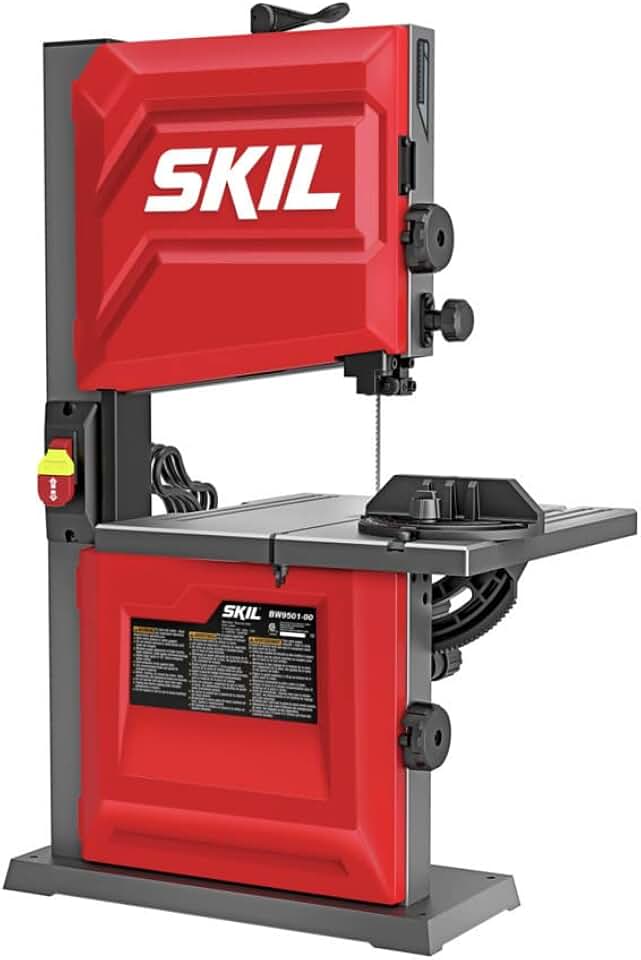
Compact Cutting Power
- Smooth 9 inch cutting capacity for everyday woodworking
- 2.8 amp motor handles light to medium tasks with ease
- benchtop design saves space in small workshops
- ideal for curves, resawing, and detailed cuts
- simple setup for hobbyists and DIY projects
 Buy on Amazon
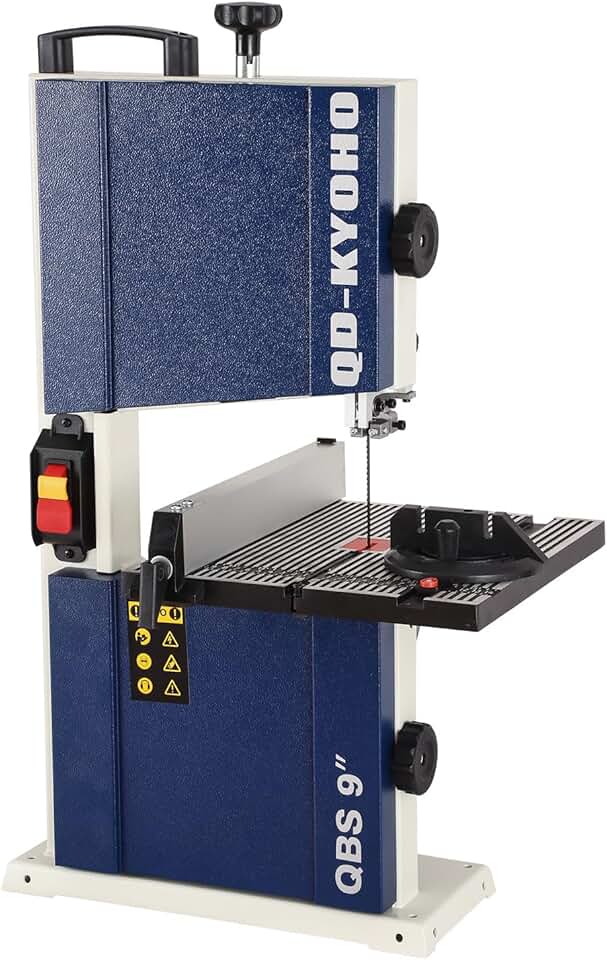
Easy Workshop Upgrade
- Two-speed control adapts to different wood types and cuts
- 9 inch benchtop size fits compact work areas
- 2.8 amp motor gives steady performance for home projects
- reliable for curves, rip cuts, and precision shaping
- a practical choice for DIY woodworkers
Buy on Amazon
Portable Shop Saw
- Portable 9 inch design is easy to place in small shops
- 2526 FPM blade speed helps deliver efficient cuts
- cast aluminum worktable supports smoother, more stable work
- included miter gauge improves angled cutting accuracy
- strong choice for woodworking detail and general use
Buy on Amazon

Reliable Benchtop Cutter
- 3 amp motor delivers consistent power for wood projects
- 2500 FPM speed supports clean, controlled cuts
- cast aluminum table offers solid support while working
- removable safety key adds peace of mind in the shop
- steel base helps keep the saw steady during use
Buy on Amazon

Versatile Two-Speed Saw
- Dual speed settings for both hard and soft wood tasks
- 10 inch cutting size handles larger project pieces
- quick tension system makes blade changes faster and easier
- tool-free doors simplify maintenance and adjustments
- included stand adds better working height and stability
Buy on Amazon
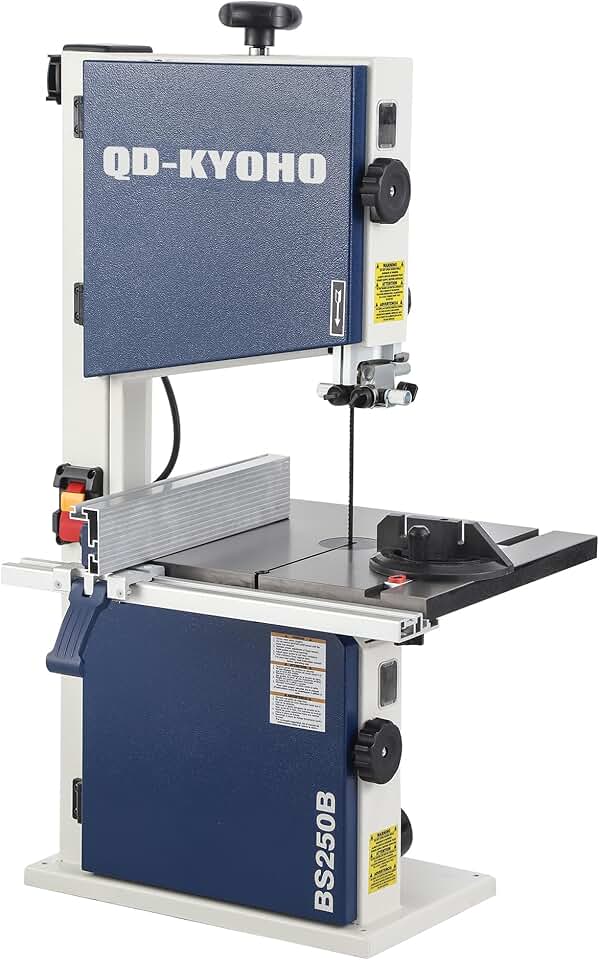
Heavy-Duty 10 inch Saw
- Dual speeds help match the saw to different materials
- 10 inch capacity is great for larger woodworking jobs
- 5.3 amp motor provides strong, dependable cutting power
- double-sided fence assembly supports straighter cuts
- miter gauge improves accuracy for angled work
Buy on Amazon
Precision Small Workpieces

For precision workpieces, prioritize blade guide adjustment, table flatness, visibility at the cut line, and a miter gauge that doesn’t rattle in the slot. Tiny parts invite finger-risk mistakes, so use a push stick, carrier board, or double-sided tape on a larger scrap backer.
These precision-focused saws fit craft blanks, detailed curves, small parts, and compact workspaces where control matters more than raw capacity.

Detail-Ready Benchtop Saw
- 8 inch cutting width fits precise woodworking tasks
- 3-1/8 inch max height handles many small project cuts
- 0-45 degree tilting worktable supports angled work
- double-sided fence helps guide cleaner, straighter cuts
- miter gauge adds more control for detailed shaping
Buy on Amazon
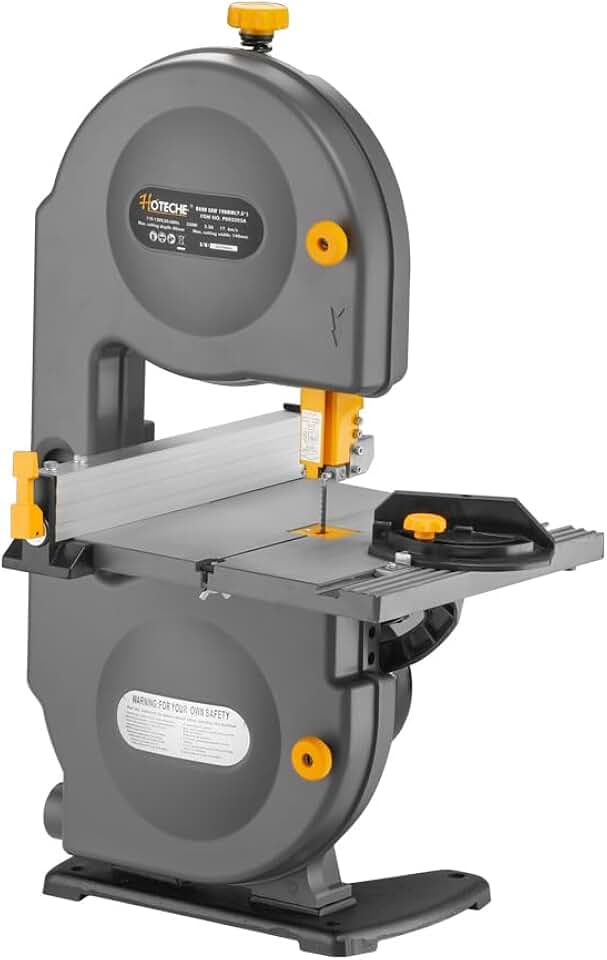
Compact Precision Saw
- 7.5 inch size works well in smaller workshops
- 3 amp motor gives dependable power for light cutting
- 3.2 inch max depth handles useful project thicknesses
- 0-45 degree table tilt supports angled cuts
- suitable for both woodworking and light metal cutting
Buy on Amazon

Bright and Powerful Saw
- 3.5 amp motor provides strong cutting performance
- two-speed operation gives more control over different materials
- integrated LED worklight improves visibility at the cut line
- 9 inch size is a smart fit for compact shops
- built for cleaner, more confident cutting
Buy on Amazon

Shop-Ready Band Saw
- 10 inch capacity handles a wide range of woodworking jobs
- 3.5 amp motor delivers reliable everyday power
- two-speed settings help match cut quality to the task
- included stand adds stability and better working height
- a solid pick for home shops and DIY builders
Buy on Amazon
Benchtop Band Saw Size Guide

The right band saw size depends on stock thickness, storage space, and how often you cut straight lines versus curves. For most small shops, 9 inch is the compact starter size, while 10 inch gives enough extra capacity to feel more serious.
8 Inch and Smaller
An 8 inch saw or smaller is best for crafts, model parts, thin stock, foam, soft plastic, and small woodworking blanks. The blade makes a higher, sharper whine than larger saws, and the table can feel cramped when a workpiece is wider than your palm.
The beginner mistake is expecting heavy cuts from a light machine. Use narrow blades for tight curves, keep the stock thin, and add a zero-clearance insert to reduce tear-out on tiny pieces.
9 Inch Benchtop Band Saw
A 9 inch benchtop band saw is often the sweet spot for beginners who want curved cuts and compact size without buying a floor-standing machine. Most models work well on pine, plywood, MDF, craft blanks, and moderate hardwood when you feed slowly and keep the blade sharp.
The weak point is cutting height, especially near the maximum spec. A saw may list around 3 to 3-1/2 inches of height, but thick oak can slow the blade enough that you hear the motor pitch drop and smell warm dust before the cut starts drifting.
10 Inch Band Saw
A 10 inch band saw fits users who still need compact storage but want more throat capacity, more cutting height, and better support for thicker boards. Many 10 inch benchtop or stand-mounted saws add two-speed operation, stronger motors, better fences, and larger tables.
This size is a better long-term buy for small furniture parts, turning blanks, and occasional resawing. If your shop also handles straight ripping and sheet goods, pair it with a table saw guide like our best table saw comparison instead of asking one compact band saw to do everything.
Larger Floor-Standing Saws
A floor-standing saw is the better pick for routine resawing, wide boards, veneer work, and thick hardwood. The larger frame tensions wider blades better, the heavier wheels carry momentum through the cut, and the bigger table makes long stock less twitchy.
The trade-off is shop space, weight, and setup. If you’re already comparing compact saws against larger machines, our band saw buying guide gives a broader look at used, benchtop, and floor-standing options.
Grizzly Benchtop Bandsaw Comparison
A grizzly benchtop bandsaw attracts buyers who want a compact saw with a more woodworking-focused brand behind it. Grizzly often competes with WEN, SKIL, Rikon, and Shop Fox in this space, but brand reputation doesn’t erase the physical limits of a compact 9 inch frame.
Grizzly vs WEN
Grizzly vs WEN usually comes down to build feel, support, fence quality, and how much you value parts access over lowest entry cost. WEN often wins for budget-friendly beginner use, while Grizzly appeals to users who want shop-machine styling and stronger support from a machinery-focused seller.
Before choosing, check actual capacity, blade length, table material, dust port size, and replacement blade availability for the exact model. Grizzly lists compact model specs and manuals through Grizzly Industrial, which is useful for confirming parts before purchase.
Grizzly vs SKIL
Grizzly vs SKIL is often a choice between tool-line convenience and woodworking-machine support. SKIL-style 9 inch saws can be practical for DIY users, while Grizzly-style saws may feel more appealing if you plan to adjust, maintain, and upgrade the machine over time.
The beginner trap is buying by badge. A poorly tensioned premium compact saw still cuts worse than a cheaper saw with a sharp blade, square table, and guides set close to the stock.
Build and Support
Build quality shows up in the table, wheel alignment, guide posts, fence lock, tension knob, and door fit. A good compact saw closes with a dull metal click, tracks without constant chasing, and doesn’t shake the pencil off the bench at startup.
Support matters because small parts wear: tires, thrust bearings, guide blocks, throat plates, belts, switches, and blades. If a saw uses odd blade lengths or hard-to-source tires, savings can disappear the first time it needs maintenance.
Compact Saw Limits
A compact saw has limits in frame stiffness, blade tension, motor torque, table support, and dust collection. A Grizzly 9 inch bandsaw can be a good small-shop tool, but it still won’t behave like a 14 inch cabinet-style band saw during repeated hardwood resawing.
The workaround is matching the blade to the task and stopping before the saw struggles. For frequent thicker stock, compare compact options with larger woodworking saws such as a Rikon bandsaw class machine.
What a Benchtop Band Saw Cuts
A benchtop band saw cuts curves, irregular shapes, small rip cuts, craft parts, dowels, toy pieces, box parts, turning blanks, and light resaw cuts. It works best when the blade has room to clear chips and the user feeds with steady pressure rather than force.
Woodworking Cuts
For woodworking, a band saw for curves is safer and more controlled than forcing curved work through a table saw. It leaves a narrower kerf, supports small parts on a table, and lets you cut template shapes that would feel awkward with a circular saw or miter saw.
It isn’t the best tool for long straight rips in sheet goods. If straight dimensioning is the main job, a contractor-style table saw such as those covered in our contractor table saw guide gives better fence travel and repeatability.
Material Compatibility
Softwood and pine are easy matches for most compact saws, and plywood cuts cleanly with the right TPI. MDF cuts easily too, but the dust feels like talc on your fingers and can pack inside the lower wheel housing if you skip cleanup.
Hardwood needs patience, especially oak, maple, and walnut near the saw’s height limit. Plastic and acrylic need slower feed and finer teeth; aluminum and non-ferrous metal should be cut only if the saw speed, blade, and manual support that use, since many woodworking band saws run too fast for clean metal cutting.
Light Resawing
Light resawing means slicing a board through its thickness to make thinner boards or bookmatched pieces. A 9 inch benchtop band saw can do small resaw cuts, but repeated thick hardwood resawing calls for more motor power, better blade tension, and a taller frame.
Use a wider low-TPI blade, set the fence for blade drift, feed slowly, and let the teeth clear sawdust. If the cut face looks washboarded or the blade bows backward, stop and reduce the cut height rather than pushing harder.
Tool Alternatives
A scroll saw is better for inside cuts, fretwork, and very tight curves, while a jigsaw is better for cutting large panels away from the bench. A table saw is better for straight repeat cuts, sheet goods, and production ripping.
If you’re stuck choosing between a small band saw and a scroll saw, read our scroll saw vs band saw comparison before buying. The wrong tool can turn a simple curve into a noisy, splintered fight.
Blades, Specs, and Setup
Blade choice and setup decide whether a benchtop band saw cuts smoothly or wanders across the line. A modest saw with a sharp, correctly tensioned blade often beats a stronger saw using a dull factory blade and loose guides.
Throat and Cutting Height
Throat capacity is the distance from the blade to the frame, so a 9 inch saw can usually fit a piece close to 9 inches wide. Cutting height is the vertical thickness the saw can cut, and that number matters more for thick boards and resawing.
Cutting at maximum height is harder than the brochure suggests. On compact saws, the blade can twist under feed pressure, the motor can slow, and the cut face can turn rough unless the blade is sharp and suited to thick stock.
Motor and Blade Speed
Motor amps give a rough power clue: many 9 inch saws sit around 2.5 to 3.5 amps, while stronger 10 inch units may reach about 5 amps or more. Amps alone don’t tell the full story because blade speed, pulley setup, frame stiffness, and blade tension change cutting feel.
Blade speed near 2,500 FPM is common for woodworking compact saws. Two-speed machines help with harder wood, softer wood, plastic, and light compatible non-ferrous work, but always follow the manual before cutting metal.
Blade Width and TPI
Blade width controls curve radius and straight-line stability. Use 1/8 inch for tight curves, 3/16 inch for detailed work, 1/4 inch for general cuts, 3/8 inch for straighter cuts and light resawing, and 1/2 inch only if the saw can tension it properly.
TPI choice controls feed speed and finish. Use 3–4 TPI for faster thick ripping, 6 TPI as a general woodworking starting point, 10 TPI for smoother thin wood, and 14 TPI for thin stock, plastic, and finer cuts.
Table, Fence, and Dust
A flat table and square fence matter more than many buyers expect. Cast aluminum tables are common and light, while cast iron feels steadier but adds cost and weight; most compact tables tilt 0–45 degrees for bevel cuts.
Dust collection is rough on many small saws because dust falls below the table and packs around the lower wheel. Fine wood dust is also a health concern, and OSHA’s woodworking guidance identifies dust collection and housekeeping as key controls in shop environments through the OSHA woodworking eTool.
Tracking, Tension, and Guides
Blade tracking sets where the blade rides on the wheel crown, and you should check it after every blade change. Poor tracking causes rubbing, wandering cuts, and in bad cases a blade that jumps off with a slap inside the wheel cover.
Tension and guides need small, careful adjustments. Set side guides close without pinching, set thrust bearings just behind the blade, lower the guard near the stock, then make test cuts because the tension scale on small saws is often only a rough hint.
Small Band Saw Problems and Safety
Most small band saw problems come from blade setup, blade quality, bench stability, or feeding too fast. Safety starts with a stable saw, a sharp blade, proper guard height, and hands kept out of the cut path.
Blade Wandering
Blade wandering usually comes from low tension, a dull blade, guides set too far away, fast feed pressure, or a blade that’s too narrow for straight ripping. The fix is to slow down, increase tension within the manual’s range, move the guides closer, and use a wider blade for rip cuts.
A pro-level workaround is to mark drift with a freehand test cut before using the fence. If the blade naturally cuts two degrees left, align the fence to that drift angle instead of forcing the board straight into binding.
Vibration and Noise
Vibration problems come from a light bench, loose mounting bolts, unbalanced wheels, damaged tires, a bad blade weld, or a base that flexes. Bolt or clamp the saw down before blaming the motor; a hollow workbench can act like a drum and make a good saw sound cheap.
Noise should sound like a steady whir, not a rhythmic thump. A repeating bump often points to a blade weld, tire defect, or wheel issue, while a scraping sound means the blade may be touching a guide, guard, or insert.
Rough or Burned Cuts
Burned cuts usually mean dull teeth, too many TPI for thick stock, pitch buildup, weak dust clearing, or feed pressure that’s too slow and rubbing. Clean the blade, switch to lower TPI for thick wood, and let the teeth bite instead of polishing the kerf.
Factory blades often feel acceptable at first, then leave fuzzy fibers after a few hardwood cuts. Replacing that blade is the fastest upgrade on many compact saws, especially for clean curves and light resawing.
Blade Comes Off
If the blade comes off, stop and disconnect power before opening the wheel doors. Common causes include bad tracking, wrong tension, damaged tires, misaligned guides, a kinked blade, or twisting the workpiece during a tight curve.
The safe reset is to inspect the blade, back off the guides, set tracking by hand-turning the wheels, tension the blade, then bring the guides back close. Never restart with the covers open or your face near the blade path.
Essential Safety Practices
Band saw safety means wearing eye protection, using hearing protection for long sessions, lowering the blade guard close to the work, keeping fingers away from the cut line, and using push sticks for small parts. OSHA’s machine guarding guidance reinforces keeping guards in place and controlling exposure to moving blades through OSHA machine guarding.
Wait for the blade to stop before clearing scraps, and disconnect power before blade changes or wheel-door work. In shared garages, a removable safety key helps prevent curious hands from turning on the saw, and better lighting can be as valuable as any accessory because shadows hide the cut line.
FAQs
What Is A Benchtop Band Saw Used For?
A benchtop band saw is used for making curved cuts, small rip cuts, and general woodworking tasks on compact projects. It is a good choice for hobbyists, DIY users, and anyone who needs a space-saving saw for light to medium-duty work.
Is A 9 Inch Band Saw Big Enough?
A 9 inch band saw is big enough for many beginner and hobby projects. It works well for small furniture parts, craft work, and light shop tasks, but larger projects may need a bigger saw with more cutting capacity and a stronger motor.
Can A Benchtop Band Saw Resaw Wood?
Yes, a benchtop band saw can resaw wood, but only in a limited way. It is best for thin boards or small stock, while thicker hardwoods usually cut better on a larger saw with more throat depth, power, and blade support.
What Blade Should I Use On A Small Band Saw?
A small band saw usually works best with a narrow blade for curves or a wider blade for straighter cuts and light resawing. Choose the blade width, tooth count, and tooth style based on the material you are cutting and the type of cut you want.
Can A Benchtop Band Saw Cut Metal?
Yes, a benchtop band saw can cut metal if it is designed for that purpose and fitted with the correct blade. For best results, use a metal-cutting blade, slow the speed if needed, and avoid forcing the cut so the blade stays cooler and lasts longer.